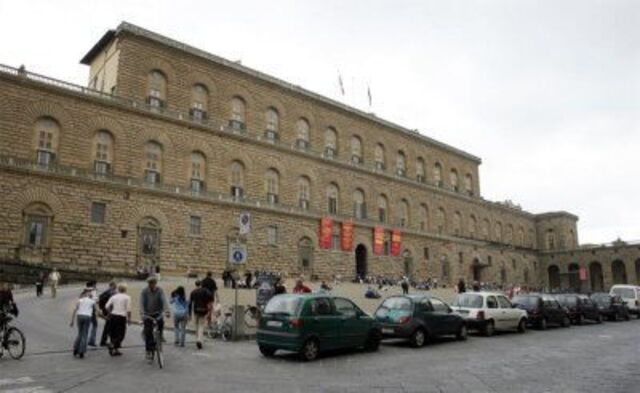
In Florence, it can be difficult to not accidentally bump into some grand piece of history. The city is nothing if not living, breathing history: a museum that people live their day to day lives in. One such piece of history lies right across the Arno from the Palazzo Vecchio and the Uffizi Gallery, the Palazzo Pitti.
The Palazzo Pitti was originally constructed by Luca Pitti who gained his wealth as a banker in Florence.
The Palazzo Pitti was originally constructed by Luca Pitti who gained his wealth as a banker in Florence.

It is said that it was his attempt to rival his friend’s, Cosimo the Elder de’ Medici, palace the Palazzo Medici. Though a beautiful and imposing structure, the original palazzo would hardly have outshined the Palazzo Medici, but the additions made to the structure over the years as well as the addition of the Boboli Gardens behind the palazzo have made it the impressive estate that it is today.
A descendant of Luca Pitti eventually sold the palazzo to Eleonora di Toledo, the wife of Cosimo I de’ Medici who would later become the Grand Duke of Tuscany. The additions that Cosimo I began with his favorite architect, Giorgio Vasari, would more than double the size of the palazzo. The Palazzo Pitti was not used as the main residence of the Grand Duke, but his important guests and dignitaries would stay there during their visits to Florence. Land behind the palazzo was acquired and the Boboli Gardens were landscaped there, centered on an amphitheater where the Medici’s would view plays with their courtiers and friends.
A descendant of Luca Pitti eventually sold the palazzo to Eleonora di Toledo, the wife of Cosimo I de’ Medici who would later become the Grand Duke of Tuscany. The additions that Cosimo I began with his favorite architect, Giorgio Vasari, would more than double the size of the palazzo. The Palazzo Pitti was not used as the main residence of the Grand Duke, but his important guests and dignitaries would stay there during their visits to Florence. Land behind the palazzo was acquired and the Boboli Gardens were landscaped there, centered on an amphitheater where the Medici’s would view plays with their courtiers and friends.
Numerous rulers have used the Palazzo Pitti since Cosimo I, where his son moved into the palace during his reign as Grand Duke, and each Grand Duke after that called it home. Napoleon used it as a power base during his short campaign throughout Northern Italy, and the Kingdom of Italy used it as its governmental seat as well with Florence as the capital.
In the 20th century King Victor Emmanuel III gave the Palazzo Pitti to the people of Italy and it opened its doors to the public for the first time as an art museum and storehouse for many of the Medici collections.
There are seven different galleries in the Palazzo Pitti today. The Palatine Gallery contains over 500 Renaissance paintings, which were part of the Medici’s collection as well as additions made by many of the Grand Dukes. The Royal Apartments have another collection of paintings, mostly by the artist Giusto Sustermans, as well as antique furnishings and adornments. The Porcelain Museum contains a sizable collection of porcelain works that were acquisitioned, commissioned or collected by the Grand Dukes and is in the Casino del Cavaliere in the Boboli Gardens.
In the 20th century King Victor Emmanuel III gave the Palazzo Pitti to the people of Italy and it opened its doors to the public for the first time as an art museum and storehouse for many of the Medici collections.
There are seven different galleries in the Palazzo Pitti today. The Palatine Gallery contains over 500 Renaissance paintings, which were part of the Medici’s collection as well as additions made by many of the Grand Dukes. The Royal Apartments have another collection of paintings, mostly by the artist Giusto Sustermans, as well as antique furnishings and adornments. The Porcelain Museum contains a sizable collection of porcelain works that were acquisitioned, commissioned or collected by the Grand Dukes and is in the Casino del Cavaliere in the Boboli Gardens.
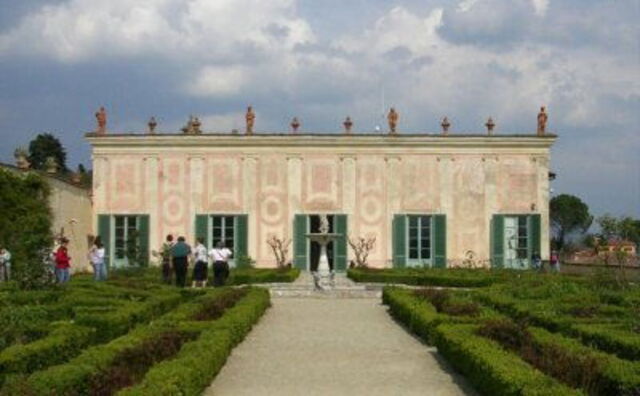
The Gallery of Modern Art can be misleading as ‘modern’ is considered roughly to be in between eighteenth and twentieth centuries and Pre-World War II. Most of these paintings are early impressionist works of the Macchiaioli movement. The Silver Museum contains a priceless collection of cameos, vases, works in gemstones and jewelry. The Carriage Museum is as it sounds, a collection of many carriages used by the Ducal courts over the years. Painted, gilded and adorned with all sorts of decorations, these carriages are works of art in and of themselves. The newest addition is the Costume Gallery, chronicling the history of fashion in Italy.
Theatrical costumes as well as garments worn by the court of the Grand Dukes, including the funeral garb of Cosimo I de’ Medici himself.
So whether you’re staying in an apartment in Florence during your trip to Tuscany, or staying in a country villa near the city be sure to plan for time at the Palazzo Pitti, as well as a wandering through the beautiful Boboli Gardens.
Theatrical costumes as well as garments worn by the court of the Grand Dukes, including the funeral garb of Cosimo I de’ Medici himself.
So whether you’re staying in an apartment in Florence during your trip to Tuscany, or staying in a country villa near the city be sure to plan for time at the Palazzo Pitti, as well as a wandering through the beautiful Boboli Gardens.