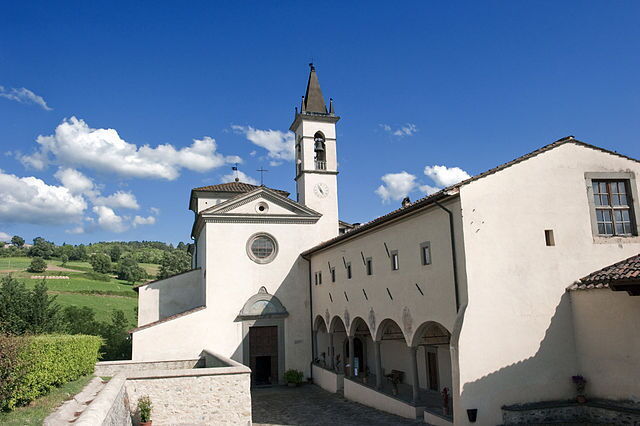
If you want to spend a few days exploring the attractive Casentino area then the large town of Bibbiena is a perfect base for you to embark on your adventures! There are a great variety of holiday villas in the area available for rental where you can enjoy your stay.
This charismatic town is home to the church of St. Lorenzo where two spectacular paintings by Andrea della Robbia called ‘Adoration of the Shepherds’ and ‘Deposition’ can be admired inside. Only two kilometres outside of this town is the monastery of San Maria del Sasso dating back to the 15th century where more of Andrea della Robbia’s work can be seen.
This stunning chapel is the perfect example of Renaissance architecture and decorative Florentine artwork as the frescos are painted all around the walls and the windows are stained in rich colours.
This charismatic town is home to the church of St. Lorenzo where two spectacular paintings by Andrea della Robbia called ‘Adoration of the Shepherds’ and ‘Deposition’ can be admired inside. Only two kilometres outside of this town is the monastery of San Maria del Sasso dating back to the 15th century where more of Andrea della Robbia’s work can be seen.
This stunning chapel is the perfect example of Renaissance architecture and decorative Florentine artwork as the frescos are painted all around the walls and the windows are stained in rich colours.
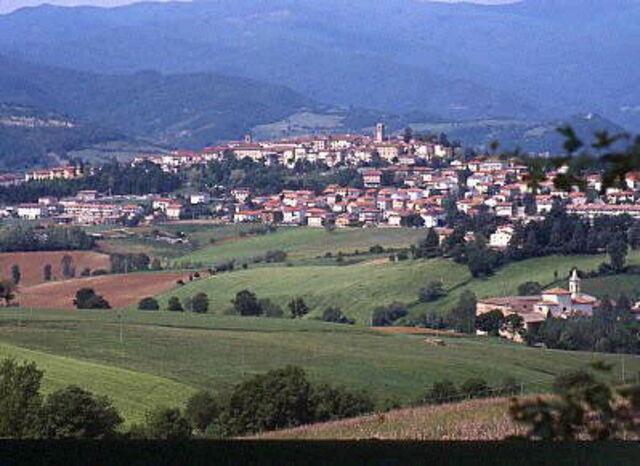
The main street of Bibbiena, Via Cavour, is lined with a porch corridor between the Oratory of the Madonna del Morbo, an example of 17th century Baroque architecture and the Vallombrosan Abbey of San Fedele dating from the late 12th century.
If you enjoy playing golf then there’s a picturesque nine-hole golf course just outside the town with a gorgeous view of the valley. The visitor can also embark on the well trodden Vallombrosa walking trail which is an excellent way to explore the natural and historical delights of the region. Along the way you will pass through a nature reserve and the Abbey of Vallombrosa.
Visit the fascinating museum beside the Abbey where you can admire Renaissance books and manuscripts, old missals, paintings and sacred vestment in grand surroundings. From certain viewpoints, you will see the majestic ‘Iron cross of Pratomagno’ which stands at a height of 1,591 metres. It was built in 1928 and is visible from high points across the Casentino region and lands beyond.
If you enjoy playing golf then there’s a picturesque nine-hole golf course just outside the town with a gorgeous view of the valley. The visitor can also embark on the well trodden Vallombrosa walking trail which is an excellent way to explore the natural and historical delights of the region. Along the way you will pass through a nature reserve and the Abbey of Vallombrosa.
Visit the fascinating museum beside the Abbey where you can admire Renaissance books and manuscripts, old missals, paintings and sacred vestment in grand surroundings. From certain viewpoints, you will see the majestic ‘Iron cross of Pratomagno’ which stands at a height of 1,591 metres. It was built in 1928 and is visible from high points across the Casentino region and lands beyond.
There’s a fascinating archaeology museum here that explores three time periods of the Casentino region. The first section of the museum exhibits ancient fossils found at the nearby site where the Lake of Villa Franchiano once existed; it’s now completely dried up and is a flourishing site for many species of flora and fauna.
It also contains artefacts found in local areas where there were once Stone Age settlements. The second section includes a striking reconstruction of what one of the first Etruscan villages in this area would have looked like.
There are remains found at the Temple of Socana and artefacts discovered from the Lake of the Idols also on display here. The third section focuses on what Roman settlements in the area would have looked like. Visitors are greeted with an impressive reconstruction of what a typical Roman country villa would have looked like.
It also contains artefacts found in local areas where there were once Stone Age settlements. The second section includes a striking reconstruction of what one of the first Etruscan villages in this area would have looked like.
There are remains found at the Temple of Socana and artefacts discovered from the Lake of the Idols also on display here. The third section focuses on what Roman settlements in the area would have looked like. Visitors are greeted with an impressive reconstruction of what a typical Roman country villa would have looked like.
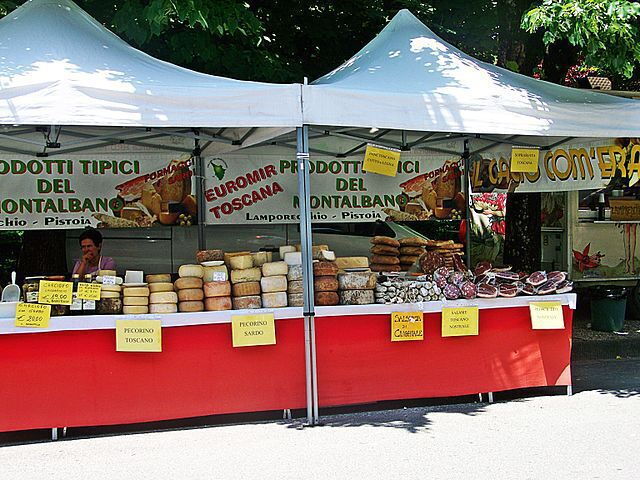
Every fourth Saturday of the month, the Mercatale market takes place in the town centre where the tourist can enjoy the sights and smells of delicious fresh produce available to buy. Local Casentino farms raise a unique type of pig called ‘Grigio’ hogs.
They roam around the mountains eating sweet grass and herbs and so their meat has a unique and succulent flavour. It is often used in the production of local sausages and salamis which can be bought and enjoyed here. Its aroma fuses with all the other delicious smells of local cheese and breads in these markets and is sure to be an enjoyable experience for the visitor.
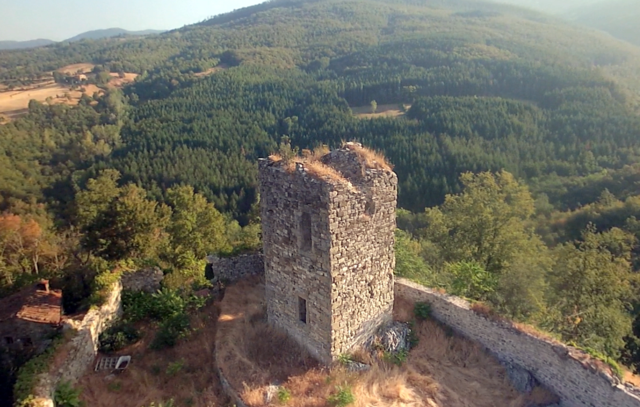
A nearby tourist attraction just a short detour of eight kilometres outside of Bibbiena is the now barely visible ruin of what was once a magnificent Castle, the Castle of Fronzola. Close to the large town of Poppi, this castle is now buried mostly under dense vegetation and soil but was once one of the largest castles in the area, complete with grand fortified walls and many entries. A medieval cobbled road that lies in front of it can still be walked upon. A tiny village named after the castle is built just beside it, in which less than a dozen people live! There’s a nearby well where the inhabitants go to wash their clothes and cooking utensils.
They roam around the mountains eating sweet grass and herbs and so their meat has a unique and succulent flavour. It is often used in the production of local sausages and salamis which can be bought and enjoyed here. Its aroma fuses with all the other delicious smells of local cheese and breads in these markets and is sure to be an enjoyable experience for the visitor.
A nearby tourist attraction just a short detour of eight kilometres outside of Bibbiena is the now barely visible ruin of what was once a magnificent Castle, the Castle of Fronzola. Close to the large town of Poppi, this castle is now buried mostly under dense vegetation and soil but was once one of the largest castles in the area, complete with grand fortified walls and many entries. A medieval cobbled road that lies in front of it can still be walked upon. A tiny village named after the castle is built just beside it, in which less than a dozen people live! There’s a nearby well where the inhabitants go to wash their clothes and cooking utensils.
Photo credits
picture 1: Vignaccia76 / CC BY 3.0;
picture 3: MassimoCivitelli / CC BY 3.0;
picture 4: Massimilianogalardi / CC BY 3.0
picture 1: Vignaccia76 / CC BY 3.0;
picture 3: MassimoCivitelli / CC BY 3.0;
picture 4: Massimilianogalardi / CC BY 3.0