Florence is well-known throughout the world as a centre for art and architecture, as well as being the birth-place of the Renaissance. During this period of “rebirth”, there was expanded and recovered knowledge of advances in art and architecture. The styles and genius of ancient Rome and Greece were appropriated and used in new ways with varying degrees of accuracy and loyalty. One of the staunchest supporters of the ancients was Alberti, an architect famous for his buildings and his treatise, “On Architecture”.
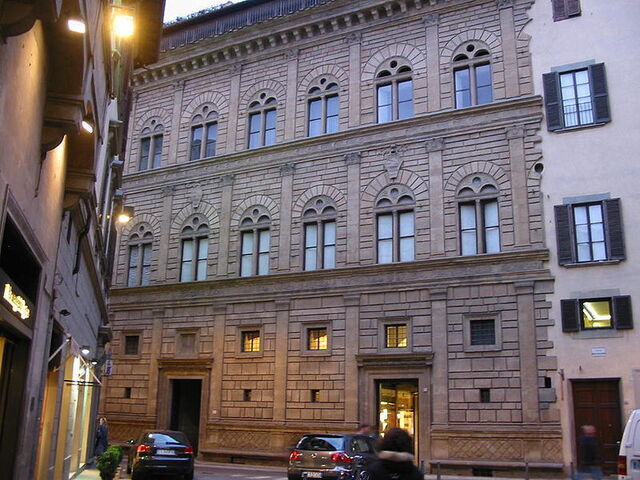
A wonderful example of his work is the Palazzo Rucellai Florence's historic centre. Find a villa with pool near Florence and you could visit it yourself this summer!
A wonderful example of his work is the Palazzo Rucellai Florence's historic centre. Find a villa with pool near Florence and you could visit it yourself this summer!
After the Medici built their new palace in the 15th century, there was a boom of palace building in Florence.
The Rucellai, for whom the Palazzo Rucellai was built, was another of the great families of Florence, made rich through their trade as wool merchants.
They were eager to express their loyalty to the Medici and chose architecture to set their intentions, quite literally, in stone.
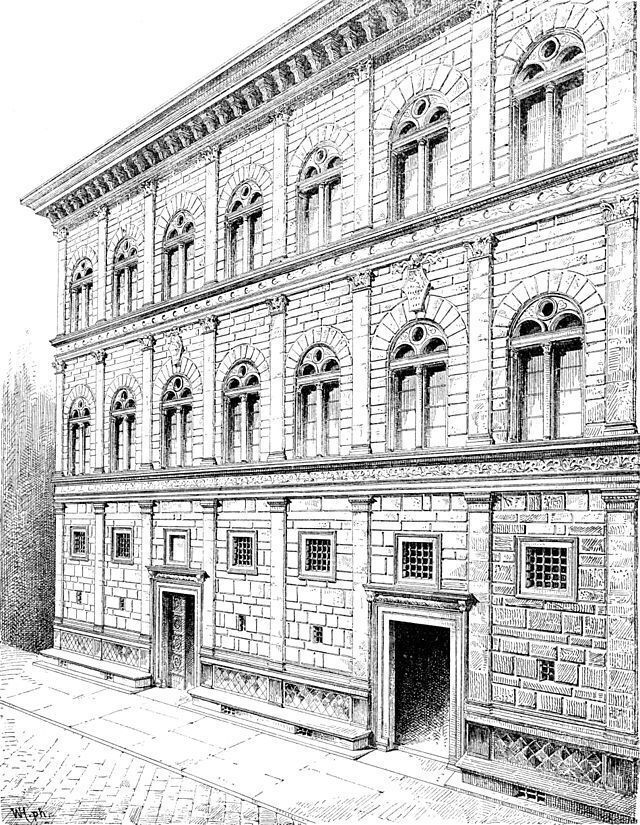
Alberti references their palace here with the division of the great façade into three primary storeys. Furthermore, the Medici device is carved into the ground floor with the Rucellai's placed a floor above.
However, despite the desire to align themselves with the Medici in the building, there are differences between the two. The heavy rustication of the Medici palace is missing in the Rucellai home.
Without this, it loses the sense of fortification and the link to the Palazzo Vecchio (the town hall) is absent.
The Rucellai, for whom the Palazzo Rucellai was built, was another of the great families of Florence, made rich through their trade as wool merchants.
They were eager to express their loyalty to the Medici and chose architecture to set their intentions, quite literally, in stone.
Alberti references their palace here with the division of the great façade into three primary storeys. Furthermore, the Medici device is carved into the ground floor with the Rucellai's placed a floor above.
However, despite the desire to align themselves with the Medici in the building, there are differences between the two. The heavy rustication of the Medici palace is missing in the Rucellai home.
Without this, it loses the sense of fortification and the link to the Palazzo Vecchio (the town hall) is absent.
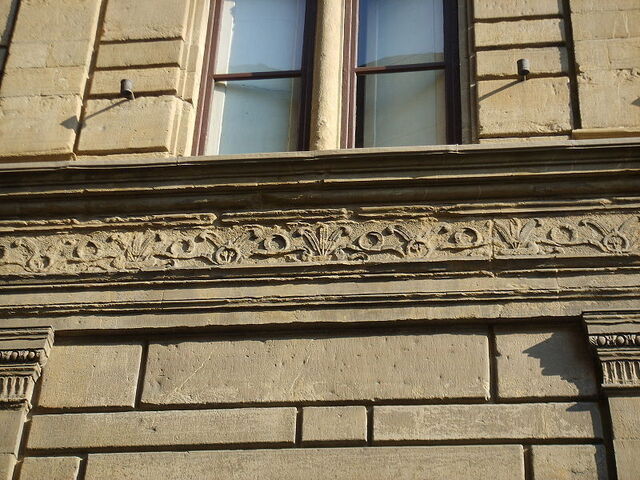
The Palazzo Rucellai is less rustic, more intellectual. Geometry and proportion are big concerns and classical elements from Alberti's study of antiquity abound; pilasters, rounded arches, string-courses with prominent entablatures. The organisation of superimposed pilasters moving upwards from Tuscan, to Ionic, to Corinthian references buildings such as the Colosseum directly and shows the extent of Alberti's knowledge.
If you look at the building, it is immediately apparent that it was never finished. Only two thirds of the intended building was actually completed with the evidence of this visible in how it is absorbed into the building next door.
Despite the fact that the building was never completed, it is still one of the finest examples of domestic Renaissance architecture in Florence and, probably, the world. If you pay a visit to Florence, be sure to stop by!
If you look at the building, it is immediately apparent that it was never finished. Only two thirds of the intended building was actually completed with the evidence of this visible in how it is absorbed into the building next door.
Despite the fact that the building was never completed, it is still one of the finest examples of domestic Renaissance architecture in Florence and, probably, the world. If you pay a visit to Florence, be sure to stop by!
Photo credits
picture 1: Giorgiomantoan / CC BY-SA 3.0;
picture 3: sailko / CC BY 2.5
picture 1: Giorgiomantoan / CC BY-SA 3.0;
picture 3: sailko / CC BY 2.5