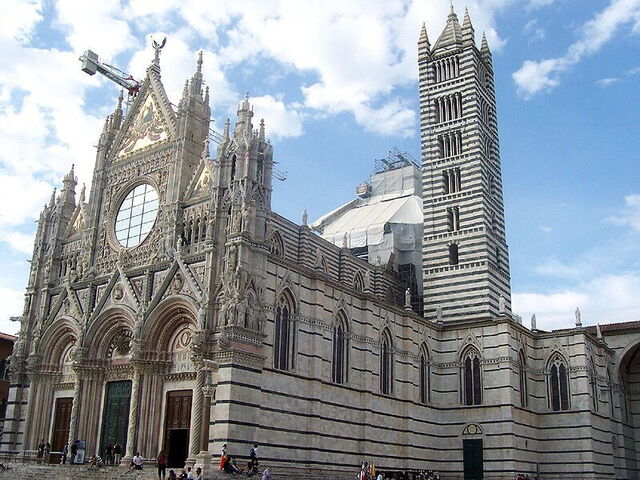
Siena Cathedral, or the Metropolitan Cathedral of Saint Mary of the Assumption, is a 13th century church in Siena, Tuscany. As it houses works by Donatello, Bernini, Michelangelo and Cimabue (among others) and is one of the main sights in the city, chances are that it is already on many itineraries of visitors to the city. However, if you have found a luxury villa in Siena and are making the trip there this summer, there is even more reason to visit the Cathedral.
For four months, the entirety of the beautiful paving that adorns the floor of the Cathedral will be on show this year.
The site of the Cathedral originally housed a 9th century church and bishop's palace. An incomplete cathedral was built there in the 12th century and in the 13th and 14th centuries it was expanded. Perhaps the most well-known element of the Cathedral at Siena is the façade which is different on each face and particularly magnificent at the front. It was built in two phases and combines French Gothic, Tuscan Romanesque and Classical styles using distinctive polychrome marble and surrounded by sculptures.
The site of the Cathedral originally housed a 9th century church and bishop's palace. An incomplete cathedral was built there in the 12th century and in the 13th and 14th centuries it was expanded. Perhaps the most well-known element of the Cathedral at Siena is the façade which is different on each face and particularly magnificent at the front. It was built in two phases and combines French Gothic, Tuscan Romanesque and Classical styles using distinctive polychrome marble and surrounded by sculptures.
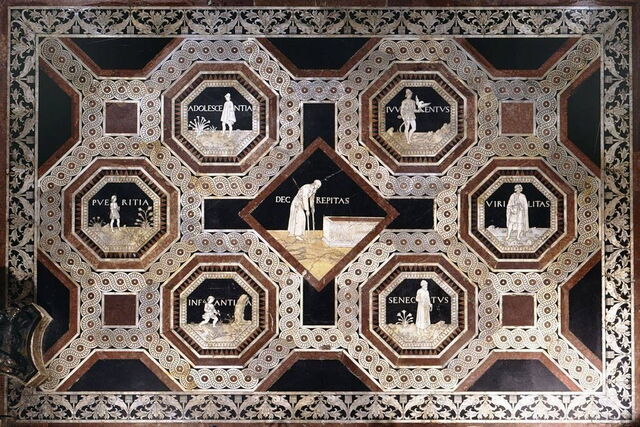
Inside, it is organised on a Latin cross plan with a transept, stepped choir, projecting sacristy and library, and dome. The magnificent pavement covers the whole floor of the Cathedral and is one of the most ornate of its kind in all of Italy. Over forty artists worked on it between the 14th and 16th centuries and it consists of 56 panels of various sizes.
Rather well-preserved, the scenes on the floors depict sybils, stories from the Old Testament, allegories and virtues. Most of the year they remain covered, being revealed for 6-8 weeks around September.
This year, however, they are being shown to the public from August 18th to October 27th and additionally in July to celebrate the World Expo in Milan.
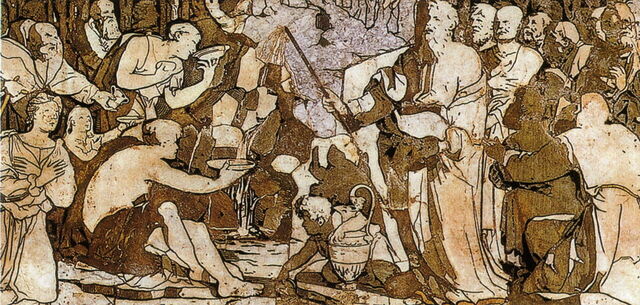
The theme of the Expo is “Feeding the Planet, Energy for Life” (i.e. sustainable food practices). Every region of Italy will be present at Expo and host events connected to the theme. In the case of the Cathedral at Siena, the piece being exhibited in honour of the Expo will be the scene in front of the main altar of Moses releasing water from the rock by Beccafumi. As water is both a necessity for, and symbol of, life, it makes for the perfect scene to represent the theme. Beccafumi was the most renowned Sienese artist of his time and worked on cartoons for the floor for 30 years. He designed scenes from the Elijah, Mosese and Isaac cycles.
It is a rare opportunity to see so much of the floor for so long a period of time which gives you no excuse to miss it if you visit Siena between July and October. Be sure to stop by, you won't be disappointed!
Rather well-preserved, the scenes on the floors depict sybils, stories from the Old Testament, allegories and virtues. Most of the year they remain covered, being revealed for 6-8 weeks around September.
This year, however, they are being shown to the public from August 18th to October 27th and additionally in July to celebrate the World Expo in Milan.
The theme of the Expo is “Feeding the Planet, Energy for Life” (i.e. sustainable food practices). Every region of Italy will be present at Expo and host events connected to the theme. In the case of the Cathedral at Siena, the piece being exhibited in honour of the Expo will be the scene in front of the main altar of Moses releasing water from the rock by Beccafumi. As water is both a necessity for, and symbol of, life, it makes for the perfect scene to represent the theme. Beccafumi was the most renowned Sienese artist of his time and worked on cartoons for the floor for 30 years. He designed scenes from the Elijah, Mosese and Isaac cycles.
It is a rare opportunity to see so much of the floor for so long a period of time which gives you no excuse to miss it if you visit Siena between July and October. Be sure to stop by, you won't be disappointed!