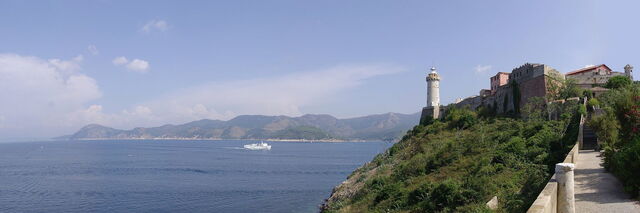
Napoleon was very famously temporarily exiled, after his forced abdication in 1814, to the island of Elba, the idyllic Tuscan island that is the third largest in Italy – hardly what most would call a “punishment”! In fact, he lived very well on the island and even had two different dwellings for the 300 days that he spent there. Villa dei Mulini was one and the other was Villa San Martin. Villa dei Mulini, also known as Palazzina dei Mulini (Palace of the Mills), is located in Portoferraio and was chosen by Napoleon as his state residence.
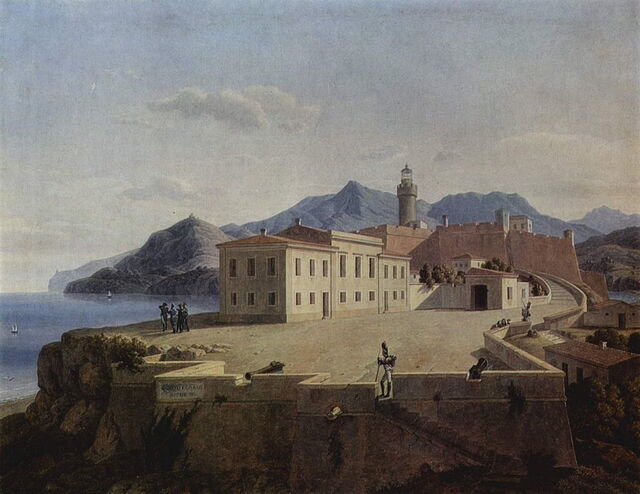
It takes its name from the surrounding area, the highest part of Portoferraio, which is particularly exposed to the wind and was originally the site of four mills before they were destroyed to create an Italian–style garden. To make the original structure, formerly the seat of the Artillery and the Engineer Corps, extensive work was completed on the building and grounds surrounding it. Today, it is a museum and a fascinating insight into the life, tastes and mind of this infamous historical figure. Once you find a vacation rental on the Tuscan Coast, be sure to stop by and visit!
When Napoleon first came to Villa dei Mulini, it really consisted of a single–floor central body that joined two symmetrical lateral pavilions together. It was renovated under architect Paolo Bargigli who raised the central part of the building in order to bring everything to the same height, as requested by Napoleon himself. This created a large salon on the raised floor, to be used for parties and receptions, and the barn was converted into a ballroom. The interior design was seen to by Vincenzo Revelli, the official court painter.
When Napoleon first came to Villa dei Mulini, it really consisted of a single–floor central body that joined two symmetrical lateral pavilions together. It was renovated under architect Paolo Bargigli who raised the central part of the building in order to bring everything to the same height, as requested by Napoleon himself. This created a large salon on the raised floor, to be used for parties and receptions, and the barn was converted into a ballroom. The interior design was seen to by Vincenzo Revelli, the official court painter.
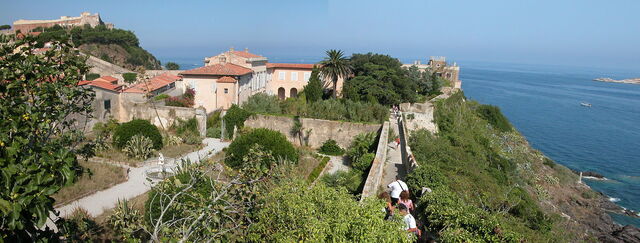
The ground floor consisted of Napoleon's own apartment and the first floor was intended to house the apartments of his wife, Marie-Louise, and son, but they never joined him on Elba. A sense of this sadness and loneliness certainly seems to pervade throughout the building to this day. However, despite the melancholy atmosphere, it is fortunate that Napoleon gave the villa to the city of Portoferraio as a museum, upon leaving.
Today, it is a National Museum and was renovated during the Bicentenary in 2014, with more work planned to bring it back to its original beauty. The original furniture, that Napoleon had brought from his residence in Piombino by his sister Elisa Baciochi, no longer exists but the furniture that was later installed was restored in the 1950s and other pieces from the Napoleonic period were acquired and placed inside by local authorities. The grand Imperial atmosphere of the building has, as a result, been resurrected. Tours bring visitors through Napoleon’s grand salon, the study, the dressing room with the Elban flag depicted on one wall, his bedroom and the library with his collection of books. Once you've finished with the interior, the exterior, with its grand terraces, deserves a visit, offering sweeping views over the sea and coast of Tuscany.
Today, it is a National Museum and was renovated during the Bicentenary in 2014, with more work planned to bring it back to its original beauty. The original furniture, that Napoleon had brought from his residence in Piombino by his sister Elisa Baciochi, no longer exists but the furniture that was later installed was restored in the 1950s and other pieces from the Napoleonic period were acquired and placed inside by local authorities. The grand Imperial atmosphere of the building has, as a result, been resurrected. Tours bring visitors through Napoleon’s grand salon, the study, the dressing room with the Elban flag depicted on one wall, his bedroom and the library with his collection of books. Once you've finished with the interior, the exterior, with its grand terraces, deserves a visit, offering sweeping views over the sea and coast of Tuscany.
Photo credits
Picture 3: Bruno Barral / CC BY-SA 2.5
Picture 3: Bruno Barral / CC BY-SA 2.5