Previously in our listing of fantastic castles that are must-sees around Tuscany, we have mentioned Sarteano's giant castle, the foodie favourite Castello di Brolio in Chianti, Prato's iconic Emperor's Castle and the Rocca di Radicofani and its infamous inhabitants. Yet, there are still plenty of other beautiful and fascinating castles worth discussing all across the region.
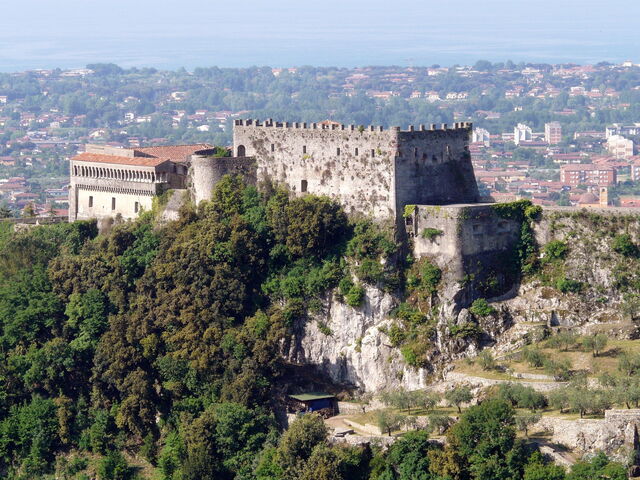
Aghinolfi Castle is a beautiful Tuscan castle perched on a hilltop with stunning views all around the Lunigiana area and out across the Tyrrhenian coast. It was purchased by the nearby town of Montignoso just over a decade ago and was then restored and opened to the public.
Aghinolfi Castle is a beautiful Tuscan castle perched on a hilltop with stunning views all around the Lunigiana area and out across the Tyrrhenian coast. It was purchased by the nearby town of Montignoso just over a decade ago and was then restored and opened to the public.
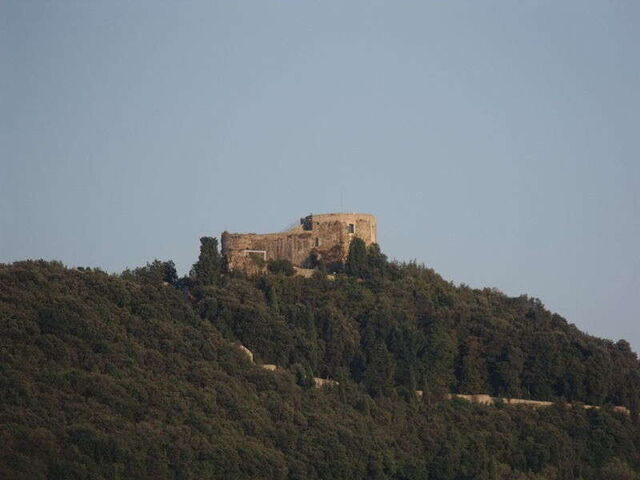
The architectural complex is made up of various elements with sturdy walls with towers encircling two large spaces at different heights. The 12th century keep, used for both military and residential purposes, consists of a large building with an octagonal base joined to a circular tower by a wall.
Due to its strategic location, the building was fought over and taken many times throughout history and has a rich and interesting history. This history is further elaborated upon in the archaeological museum that was opened on the property in 2008 and through the tours of the castle itself, to paint a rather fascinating story. Find a luxury villa in Montignoso and stop by to learn all about it for yourself.
Due to its strategic location, the building was fought over and taken many times throughout history and has a rich and interesting history. This history is further elaborated upon in the archaeological museum that was opened on the property in 2008 and through the tours of the castle itself, to paint a rather fascinating story. Find a luxury villa in Montignoso and stop by to learn all about it for yourself.
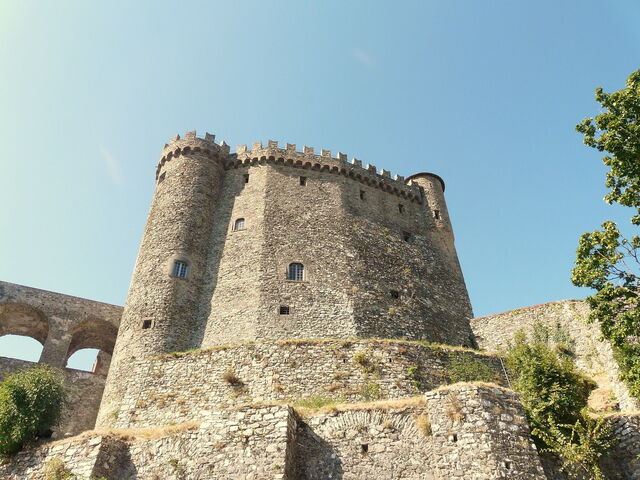
Malaspina Castle's picturesque appearance does not belie its troubled past. The first records of the castle date back to the 11th century but the original structure was levelled during a political dispute with an army from Lucca in the 13th century. Between the fourteenth to the nineteenth centuries it was rebuilt and redecorated in different phases. The structure itself merges with the underlying sandstone rock, seeming as if carved from a giant block of stone, and looks like an impregnable fortress while the interior consists of elegantly appointed apartments.
The Malaspina family, for whom the castle is named, were, and continue to be, the owners of the magnificent structure. Bianca Maria Aloisia Malaspina is the most famous member of the family, who fell in love with a stable hand and was then punished by being tortured and then buried alive in the building with two animals: a wild boar as a symbol of her rebellion and a dog as a symbol of her loyalty to her eternal love. Recent excavations have even shown there were indeed remains belonging to a girl and two animals hidden in the castle!
These two beautiful and historic castles are but a small sample of the many incredible examples that Tuscany has to offer. Read on to our next article for some more!
The Malaspina family, for whom the castle is named, were, and continue to be, the owners of the magnificent structure. Bianca Maria Aloisia Malaspina is the most famous member of the family, who fell in love with a stable hand and was then punished by being tortured and then buried alive in the building with two animals: a wild boar as a symbol of her rebellion and a dog as a symbol of her loyalty to her eternal love. Recent excavations have even shown there were indeed remains belonging to a girl and two animals hidden in the castle!
These two beautiful and historic castles are but a small sample of the many incredible examples that Tuscany has to offer. Read on to our next article for some more!
Photo credits
Picture 1: Davide Papalini / CC BY-SA 3.0;
Picture 2: LigaDue / CC BY 3.0;
Picture 3: Davide Papalini / CC BY-SA 3.0
Picture 1: Davide Papalini / CC BY-SA 3.0;
Picture 2: LigaDue / CC BY 3.0;
Picture 3: Davide Papalini / CC BY-SA 3.0