Donatello, or Donato di Niccolò di Betto Bardi, is one of the most famous artists of the Italian Renaissance and one of the most well-known names in art history. An Early Renaissance sculptor and one of the representative artists of Florence, he was born in the city around 1386 and worked prolifically there his entire life, bar a period in which he worked in Padua for the heirs of the recently deceased and famous condottiero Erasmo da Narni. Due to his long life and career and strong connection to his home town, a large body of his works still exists in the city to this day.
Exploring Florence allows one to accurately and closely explore the breadth and width of this great artist's life and career. While his name stands above many other artists in fame, his specific artworks are less well-known and most people would be hard pressed to name one, unlike the ouevre of some of the other big names of the Renaissance, such as Michelangelo and Da Vinci. Just find a luxury villa in Florence and get familiar with the potentially unfamiliar works of this familiar name.
Exploring Florence allows one to accurately and closely explore the breadth and width of this great artist's life and career. While his name stands above many other artists in fame, his specific artworks are less well-known and most people would be hard pressed to name one, unlike the ouevre of some of the other big names of the Renaissance, such as Michelangelo and Da Vinci. Just find a luxury villa in Florence and get familiar with the potentially unfamiliar works of this familiar name.
The son of Niccolo di Betto Bardi, a member of the Florentine Wool Combers Guild, Donatello was destined to a career in the trades and was educated at the home of the Martellis, a wealthy Florentine family closely tied to the Medici.
He trained under a local goldsmith and then, from 1403, he apprenticed with famous Florence metalsmith and sculptor Lorenzo Ghiberti. Shortly thereafter he became friends with another famous figure, Brunelleschi, and the pair travelled to Rome to study classical art.
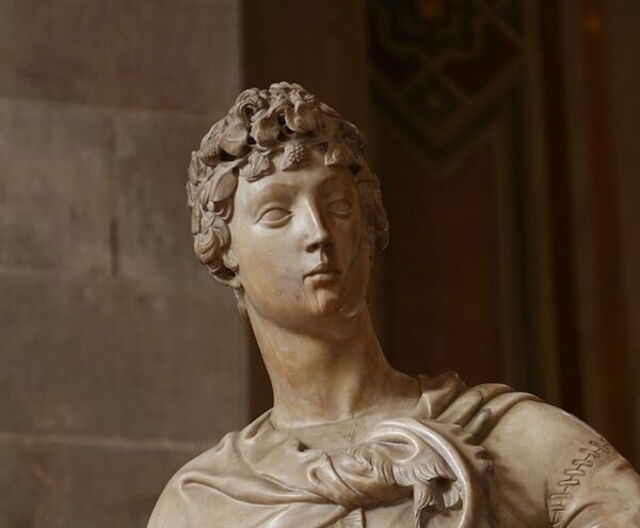
Upon returning, Donatello produced a marble figure of David. The influence of his time with Brunelleschi is visible in the long and graceful Gothic lines of the figure but his knowledge of classical works would become more and more apparent as time went on.
He trained under a local goldsmith and then, from 1403, he apprenticed with famous Florence metalsmith and sculptor Lorenzo Ghiberti. Shortly thereafter he became friends with another famous figure, Brunelleschi, and the pair travelled to Rome to study classical art.
Upon returning, Donatello produced a marble figure of David. The influence of his time with Brunelleschi is visible in the long and graceful Gothic lines of the figure but his knowledge of classical works would become more and more apparent as time went on.
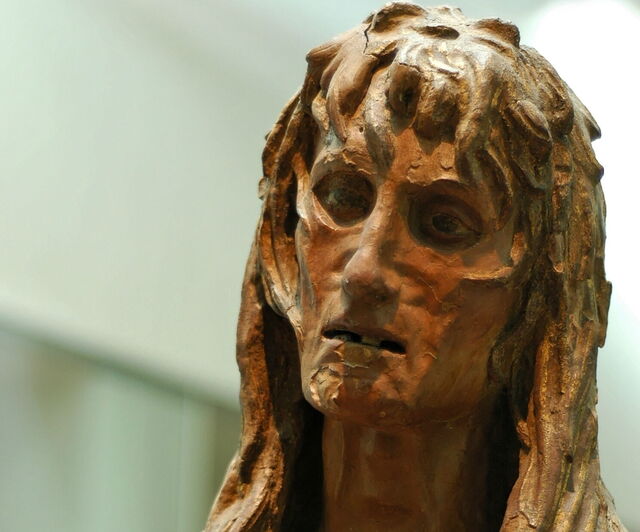
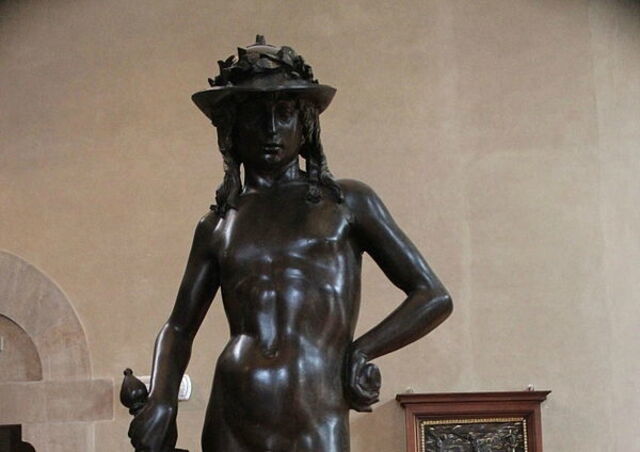
As Donatello matured as an artist, his own distinct style began to become apparent, something much more dramatic and emotional than the Gothic norm. Donatello also began to incorporate more classical techniques and innovated by employing perspective in his works. He began to make a name for himself with his larger-than-life works and innovation and the raw emotion drawn from real life with which he imbued his figures. In 1430, he produced another David, this time in bronze and very different from the earlier iteration. It is probably his most famous work and is notable for being free-standing without an architectural surroundings to support it and for its great beauty and drama that captured hearts at the time. Another of his most famous works comes from 1455, his Magdalene Penitent for the convent at Santa Maria di Cestello. The twisted and bedraggled figure of Magdalene can be seen as the peak of his emotive sculptural work. In 1466, Donatello passed away in his hometown of unknown causes, leaving behind an innovative trail that would be picked up by the great artists of the Renaissance. One of history's most interesting and trailblazing artists, his legacy must be explored by any art-lover visiting Florence.
Photo credits
picture 1: Rufus46 / CC BY-SA 3.0;
picture 2: Miguel Hermoso Cuesta / CC BY-SA 4.0
picture 1: Rufus46 / CC BY-SA 3.0;
picture 2: Miguel Hermoso Cuesta / CC BY-SA 4.0