House-museums are dotted all over the globe and there are lots of them in Italy, in particular. These are a particularly insightful and interesting breed of museum in which objects by an artist are displayed in a space in which they grew up, lived, and/or worked. Often in a childhood or final home of an artist, they celebrate the full spectrum of the life and work of an artist and are a great way to get to know more about the maker behind the pieces.
In Rome you can find the Hendrik Christian Andersen House Museum, dedicated to the life and work of the Norwegian-American 20th century artist Hendrik Christian Anderson, in Milan there is the Manzoni House Museum, dedicated to 19th century Italian writer Alessandro Manzoni, and in Possagno, the Canova Museum, which is not a former home to the artist but is where much of his living and work spaces were transported, as well as works of art, after his death. Another, more recently established house museum dedicated to an artist is Forte dei Marmi’s Ugo Guidi Museum.
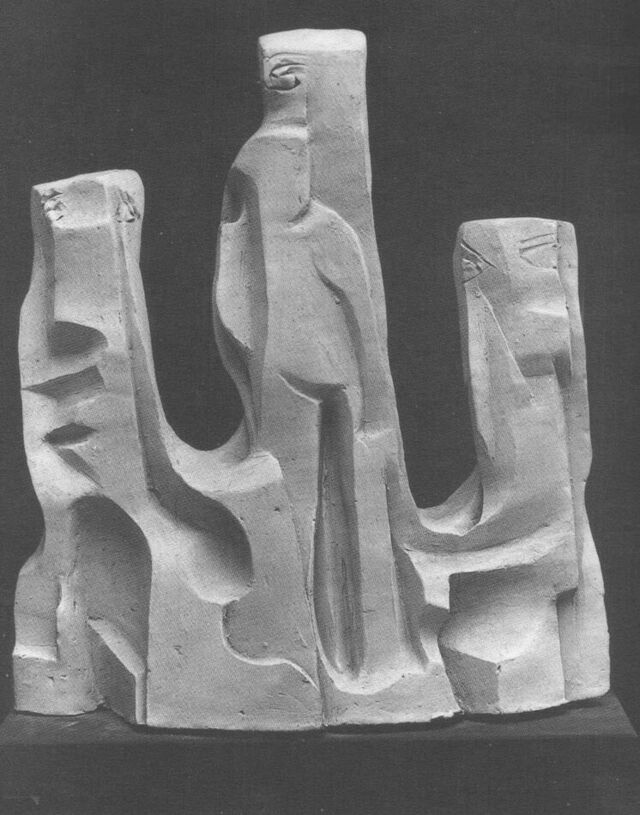
One of the most celebrated Italian sculptors of the 20th century, the museum is set in Ugo Guidi’s studio and home in this beautiful Tuscan seaside city. If you are interested in Italian art and fancy a Tuscan vacation by the sea, a holiday rental in Forte dei Marmi is a great idea as it will allow you to enjoy both at the same time! With over 600 sculptures, tempera paintings, drawings, and more by the artist on display, the Ugo Guidi Museum is a fine testament to his legacy that maps out the artist’s entire life and career inside the space in which he both worked and lived.
In Rome you can find the Hendrik Christian Andersen House Museum, dedicated to the life and work of the Norwegian-American 20th century artist Hendrik Christian Anderson, in Milan there is the Manzoni House Museum, dedicated to 19th century Italian writer Alessandro Manzoni, and in Possagno, the Canova Museum, which is not a former home to the artist but is where much of his living and work spaces were transported, as well as works of art, after his death. Another, more recently established house museum dedicated to an artist is Forte dei Marmi’s Ugo Guidi Museum.
One of the most celebrated Italian sculptors of the 20th century, the museum is set in Ugo Guidi’s studio and home in this beautiful Tuscan seaside city. If you are interested in Italian art and fancy a Tuscan vacation by the sea, a holiday rental in Forte dei Marmi is a great idea as it will allow you to enjoy both at the same time! With over 600 sculptures, tempera paintings, drawings, and more by the artist on display, the Ugo Guidi Museum is a fine testament to his legacy that maps out the artist’s entire life and career inside the space in which he both worked and lived.
Born in Querceta in 1912, Guidi lost his father in WWI and became very attached to his mother. He attended the Institute of Art of Pietrasanta and then the Academy of Fine Arts of Carrara. His earliest works were produced in the marble that has long since inspired and been a primary medium in the region in the 1940s and many examples of this period are on display in the Ugo Guidi Museum, opening the exhibition. In this period, he also became an assistant to Arturo Dazzi and began teaching at the Academy in Carrara. He was later offered the opportunity to become a professor but turned it down as it required a move to Sicily. He did, however, relocate to Forte dei Marmi, where he continued to live and work until the end of his life (bar a year in Florence).
Guidi quickly garnered success in Forte dei Marmi and, upon exhibiting in Florence in 1956, he received national attention and began to exhibit all around Italy. In the 60s his work received international attention and was showcased in Munich, Madrid, and Barcelona. Unfortunately, he was diagnosed with an incurable illness in 1974 and passed away in 1977, a few days after his final exhibition opened in the "La Vecchia Farmacia" Gallery in Forte dei Marmi.
He passed away in his own home at No. 33, Via Civitali in Vittoria Apuana which had long since become one of the city’s most important meeting spaces for the best and brightest minds and culture vultures of the time – artists and critics like Soffici, Carena, Papini, De Grada, Treccani, Migneco, Luzi, Funi, Dallapiccola, Gatto, Greco, Bueno, Maccari, and Santi. This same space went on to become the Ugo Guidi Museum in 2005. It not only displays an incredible cross-section of his work and career but the museum, located as it is in Guidi’s former residence and studio, has preserved his work space and his work tools: easels for working clay, mallets, rasps, palettes, chisels, the stone used to sharpen his tools, Indian ink, paint brushes, and much more besides. The tiny garden outside plays host to large sculptures by the artist.
Guidi quickly garnered success in Forte dei Marmi and, upon exhibiting in Florence in 1956, he received national attention and began to exhibit all around Italy. In the 60s his work received international attention and was showcased in Munich, Madrid, and Barcelona. Unfortunately, he was diagnosed with an incurable illness in 1974 and passed away in 1977, a few days after his final exhibition opened in the "La Vecchia Farmacia" Gallery in Forte dei Marmi.
He passed away in his own home at No. 33, Via Civitali in Vittoria Apuana which had long since become one of the city’s most important meeting spaces for the best and brightest minds and culture vultures of the time – artists and critics like Soffici, Carena, Papini, De Grada, Treccani, Migneco, Luzi, Funi, Dallapiccola, Gatto, Greco, Bueno, Maccari, and Santi. This same space went on to become the Ugo Guidi Museum in 2005. It not only displays an incredible cross-section of his work and career but the museum, located as it is in Guidi’s former residence and studio, has preserved his work space and his work tools: easels for working clay, mallets, rasps, palettes, chisels, the stone used to sharpen his tools, Indian ink, paint brushes, and much more besides. The tiny garden outside plays host to large sculptures by the artist.
Inside, in addition to those early marbles, you will find his tuff rock pieces of the 50s, his thematic meditations from the 60s, stone sculptures, wooden sculptures, clay sculptures, paintings, graphics, objects he made for his own house, and two tables with posters and monographic books from the various exhibitions that Guidi participated in throughout the years. Highlights among the works include his meditations of motherhood, his marble totem-figures, and the large-scale pieces outdoors that evoke many of his famous site-specific pieces on a much larger scale that are dotted throughout the country, like his 1969, “Portiere” sculpture in travertine that is placed at the entrance of the stadium of Forte dei Marbles. In addition to all of this, the museum also hosts temporary exhibitions of successful artists or promising students of the Academies of Tuscany.
While Guidi’s work is on display in private and public collections around the world such as those of the Uffizi and the Palazzo Pitti in Florence, the Gallery of Modern Art in Rome, the Sportmuseum in Barcelona, the Accademy of Fine Arts in Carrara, the Museo dei Bozzetti in Pietrasanta, the Consejo Superior de Deportes in Madrid, the Contemporary Art Museum in Santiago in Chile, and the Modern Gallery in New York, the Ugo Guidi Museum remains the best place to see his work and understand his career. If you are an art-lover enjoying a vacation in Forte Dei Marmi, it is certainly one of the city’s must-see attractions and a rather unique and interesting little art museum, in general. Be sure to seek it out if you find yourself in this beautiful part of Tuscany.
Museo Ugo Guidi,
Via Matteo Civitali,
33,
55042 Forte dei Marmi,
Italy
+39 0585 349304
museougoguidi@gmail.com
Opening Hours:
Tue-Sun 6-8pm
(To make an appointment to view the museum, please contact them in advance to ensure your visit!)
While Guidi’s work is on display in private and public collections around the world such as those of the Uffizi and the Palazzo Pitti in Florence, the Gallery of Modern Art in Rome, the Sportmuseum in Barcelona, the Accademy of Fine Arts in Carrara, the Museo dei Bozzetti in Pietrasanta, the Consejo Superior de Deportes in Madrid, the Contemporary Art Museum in Santiago in Chile, and the Modern Gallery in New York, the Ugo Guidi Museum remains the best place to see his work and understand his career. If you are an art-lover enjoying a vacation in Forte Dei Marmi, it is certainly one of the city’s must-see attractions and a rather unique and interesting little art museum, in general. Be sure to seek it out if you find yourself in this beautiful part of Tuscany.
Museo Ugo Guidi,
Via Matteo Civitali,
33,
55042 Forte dei Marmi,
Italy
+39 0585 349304
museougoguidi@gmail.com
Opening Hours:
Tue-Sun 6-8pm
(To make an appointment to view the museum, please contact them in advance to ensure your visit!)
Photo credits:
Picture 1: Federico86 / CC BY-SA 3.0;
Picture 1: Federico86 / CC BY-SA 3.0;