Abbey of Passignano
Posted in: Architectural Gems Chianti Churches & Religious Buildings Localities Must See Attractions Tourist Attractions
Chianti really is an incredibly picturesque part of the world and is known for this. It is a land of rolling hills, lush countryside, endless vineyards, charming and historic medieval hilltop towns and castles. Around every bend in the road, you are likely to discover a new and stunning vista, a characteristic town with plenty of charms and things going for it or a beautiful and historic architectural and cultural gem to explore.

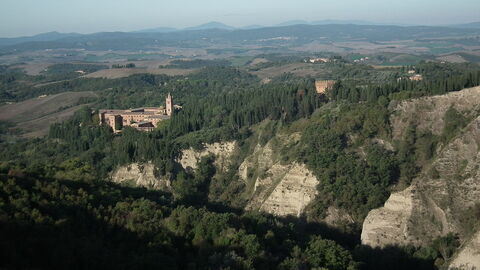
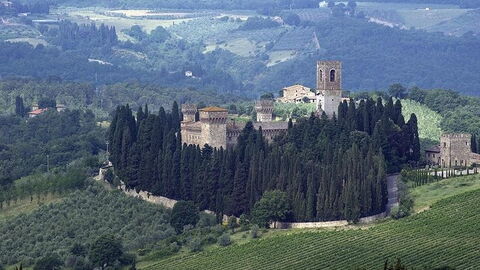
One such example of this is the photogenic Abbazia di San Michele Arcangelo a Passignano, located near Florence. Just find a luxury villa in Chianti and explore this stunning Tuscan abbey for yourself.

Known as Badia a Passignana, the abbey is located on the road from Greve in Chianti to Sambuca in Chianti and belongs to the Benedictine Order of the Abbey of Vallombrosa. This picturesque monastic complex is readily identifiable by its romantic fortified towers on the corners and was founded in 1049 by San Giovanni Gualberto. Among the buildings that make up the complex, some of them are particularly lovely, such as the 12th century church of San Michele Arcangelo. This church has paintings by Domenico Crespi and is formed of a single nave on a Latin cross plan. It was rebuilt in the 16th, 18th and early 19th centuries and was the one part of the complex that remained under the care of the monks after the rest was sold off to the government in the 19th century. Another highlight of the abbey is the amazing major fresco of the “Last Supper” by the Ghirlandaio brothers.

Interestingly, the romantic defensive features that make the abbey so distinctive were actually added more recently, in the 19th century, by a private individual who purchased the estate from the government and are not actually original features. However, in October 1986, the Abbey of Passignano was restored to the Benedictine monks of Vallombrosa and is now occupied once more by a small community of Vallombrosan monks. It is these monks who will show you around and give you a tour of the estate today. The abbey can sometimes be visited on Sundays at 3 pm, with tours departing from the church. To avoid disappointment, ensure that the abbey is open on the Sunday you plan to visit it and make an appointment by calling +39 055 80 71 278.

To avoid the tourist crowds and explore a stunning and lesser-known cultural gem in Tuscany, pencil in a trip to the Abbey of Passignano.
Monte Oliveto
Posted in: Architectural Gems Castles & Palaces Localities Siena Tourist Attractions
The Abbey of Monte Oliveto Maggiore is located in the beautiful area of Crete Senesi in the eastern part of the Sienese countryside and is not to be missed! Perched by an ancient forest and full of cultural, historical and artistic value, it is a fascinating and stunning place. Just find a villa with pool in Siena and spend a day exploring this gem, far off the beaten tourist path and away from lines and crowds.

The abbey was founded in 1313 by Sienese citizen Bernardo Tolomei who retired there after he converted to the Benedictine order. Years later construction of the Abbey began and was worked on over centuries to create the gorgeous complex that exists today. One of the main components of the complex is the church, which was constructed in the beginning of the 15th century. In the 18th century, however, the interior was updated and transformed into the baroque style.
St Antoninus
Posted in: Architectural Gems Churches & Religious Buildings Curiosities Florence History Important People Legends Localities Tourist Attractions
Mummies are probably not the first thing that comes to mind or that you associate with Florence, however, there is one lying on full view in one of her churches.

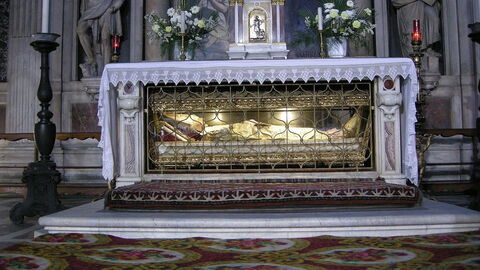
Resting in a glass coffin in the Dominican Church of San Marco in Florence is the 550 year-old mummified relic of St. Antoninus, dressed in his ornate archbishop’s garb. Interestingly, the man was made an archbishop against his wishes in the last 12 years of his life and only conceded when the pope threatened him with excommunication. He accepted the title but continued to live as a monk and only owned some simple furniture and a mule.

Once you have found a luxury villa in Florence and are exploring her churches and architectural gems, make sure to find time to stop by San Marco and learn about this fascinating man and both his life and death.
Lobby
Posted in: Architectural Gems Florence History Important People Localities Renaissance Tourist Attractions
There are many stunning buildings and other architectural gems in Florence and each has its own unique traits and histories that make them all the more interesting. One of the most striking and memorable in its comparatively simplistic theatrics, however, is the Laurentian Library.

Just browse our rentals and find the perfect luxury villa in Florence so that you can explore this amazing and stunning building for yourself.

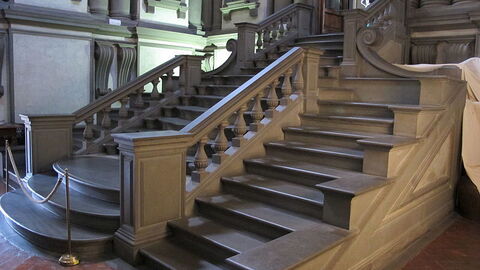
Located on the first floor of Brunelleschi's cloister, you will find an entrance to the Laurentian Library, a library that is home to the most important and prestigious collection of antique books in all of Italy and one of the greatest scholarly legacies left behind the Medici family that is still in existence.
Courtyard, Vincigliata Castle
Posted in: Architectural Gems Castles & Palaces Cortona History Localities Tourist Attractions
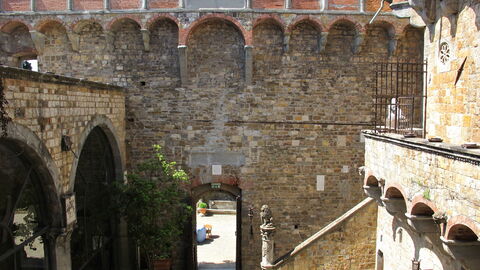
Inspired by the great beauty, the variety, the historic and cultural value, the facilities, and the juicy legends and myths of the castles of Tuscany, we endeavored to put together a list of some of the most interesting examples that the region has to offer. In our final installment in this series, we have two more wonderful castles that we would like to share with you: Girifalco Fortress in Cortona and Vincigliata Castle in Fiesole.

Girifalco Fortress was built by Gabrio Serbelloni, nephew of Pope Pie IV and Francesco Laparelli. The original foundations of the fort were from an Etruscan construction which was later used by the Goths, Lombards, Romans and then re-purposed in the Middle Ages until it was sacked in 1258. It then underwent numerous campaigns of alterations beginning in 1266 and continuing into the 16th century. The current fortress dates back to the second half of the 16th century and was part of a plan for strengthening the defences of the State ordered by Cosimo I de' Medici.