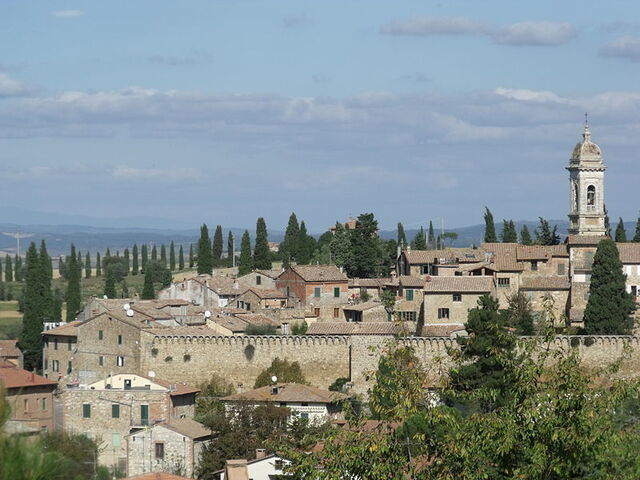
The Horti Leonini in the town of San Quirico d'Orcia, Siena, is a late 16th century park. It was created according to the direction of Diomede Leoni (for whom it is named) with funding and the donation of lands by Francesco de' Medici. Built as part of a scheme of renovation in the town after damages caused during wars between Siena and Florence, it is an oasis of beauty. Wonderfully well-preserved, the gardens have maintained their original appearance and provide a perfect example of an Italian style garden. If you are interested in landscape architecture, Italian history or gardens, this is sure to prove both stunning and fascinating. Why not find a luxury villa in Siena and spend some time wandering the grounds?
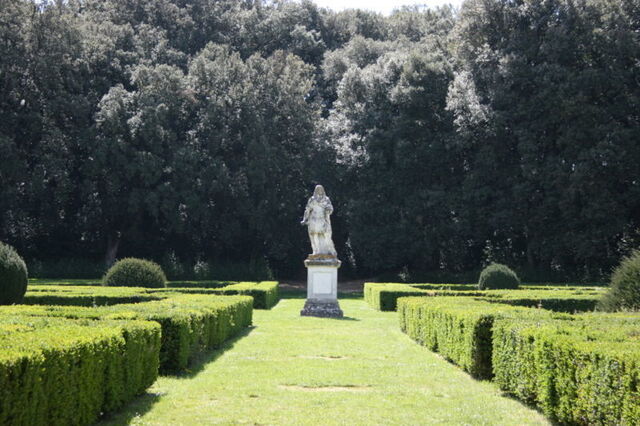
Designed in 1581 by Leoni himself, the gardens are the meeting of wildness and perfect grooming with a wooded area connected to the manicured grounds. This separates the garden into two parts. The woods are made up of holm-oaks that are centuries old and which have paths winding through them.
A staircase leads down into the second part of the gardens which is a rhomboid in shape and inside which there is a hexagonal shaped Italian garden of triangular flowerbeds, surrounded by a double box hedge and sliced through by pathways meeting at the centre.
A staircase leads down into the second part of the gardens which is a rhomboid in shape and inside which there is a hexagonal shaped Italian garden of triangular flowerbeds, surrounded by a double box hedge and sliced through by pathways meeting at the centre.
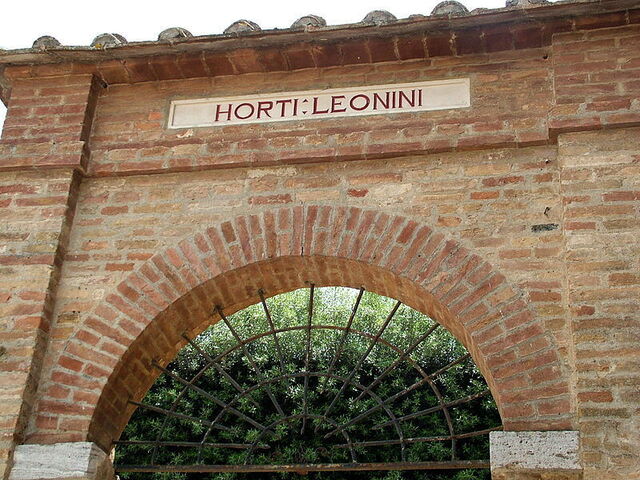
Statues are dotted through the gardens, following an elaborate scheme of references and metaphors by Leoni.
At the border between the garden and wood is a statue of Janus Bifrons, the Roman god of passages who had two faces and saw every transition as both beginning and end.
Janus marks the transition between the two parts of the garden but, on a deeper level, he also symbolises the end of Siena's independence. Yet, with this ending came new beginnings as well in the form of the construction of such places with the ever-so-kind patronage of a Florentine ruler.
The gardens became the property of the Comune of San Quirico d'Orcia in 1975 and care for its conservation was taken over by the Supervisory Service for the Environmental and Architectural Heritage of the Provinces of Siena and Grosseto, preserving it as the gem that it remains today. The gardens are open to the public for free and are well worth a visit for anyone visiting the Siena area. That their original appearance is preserved is a particular rarity and marks a good example of Italian garden tradition.
At the border between the garden and wood is a statue of Janus Bifrons, the Roman god of passages who had two faces and saw every transition as both beginning and end.
Janus marks the transition between the two parts of the garden but, on a deeper level, he also symbolises the end of Siena's independence. Yet, with this ending came new beginnings as well in the form of the construction of such places with the ever-so-kind patronage of a Florentine ruler.
The gardens became the property of the Comune of San Quirico d'Orcia in 1975 and care for its conservation was taken over by the Supervisory Service for the Environmental and Architectural Heritage of the Provinces of Siena and Grosseto, preserving it as the gem that it remains today. The gardens are open to the public for free and are well worth a visit for anyone visiting the Siena area. That their original appearance is preserved is a particular rarity and marks a good example of Italian garden tradition.
Photo credits
picture 1: Ligadue / CC BY-SA 3.0;
picture 3: ingorrr / CC BY 2.0
picture 1: Ligadue / CC BY-SA 3.0;
picture 3: ingorrr / CC BY 2.0