Once you have found the perfect holiday rental in Tuscany, the googling begins as you try and make a list of the things to see and do in this beautiful region of Italy. Food is probably going to be high on your list as Tuscany, in particular, is known for her delicious, hearty, simple and wholesome cuisine. You have probably sampled Tuscan dishes already but there is nothing quite like the real thing, especially if you are on holidays and enjoying the pace of life and surroundings of Tuscany. In order to make your life easier, we've gathered together some of the best treats that the region has to offer in this one series of posts on sweets in Tuscany. So, when you go to order a coffee to enjoy some afternoon as you sit in a piazza in Tuscany, you'll know exactly what kinds of sweets to ask for as the perfect accompaniment.
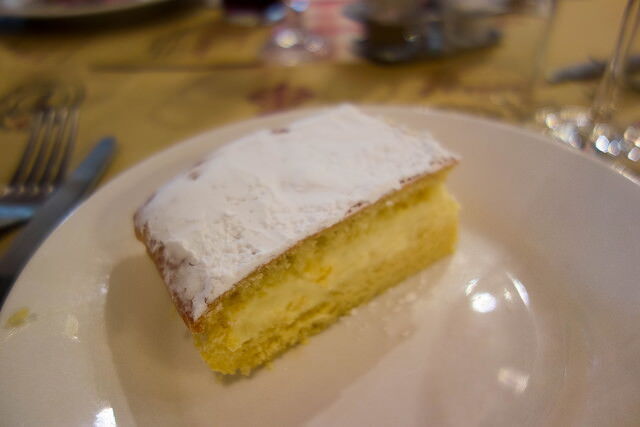
Schiacciata alla Fiorentina is a very traditional Florentine cake which can be found in local pasticceria (pastry shops) all over the city. Originally the dish was only traditionally served at Easter but it can now be purchased and enjoyed all year round. Something like a sponge cake, it is made with orange zest and a wide variety of fillings such as ricotta and cream are optional extras depending on who is making the cake. In many ways, it is like the marriage between a sponge and a lemon drizzle cake except less sweet and heavy. As such, it can be served for a light snack in the afternoon, for breakfast (as is common in Italy!) or as a dessert.
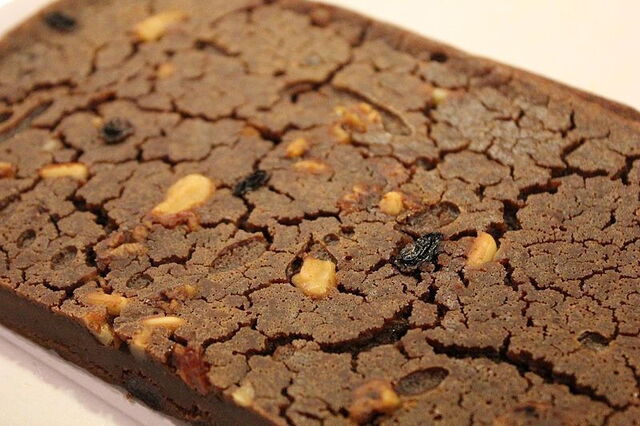
Castagnaccio, meanwhile, is a plain cake which is made from chestnut flour and is found in Tuscany, Liguria, Piedmont, Emilia-Romagna and Corsica. However, it is widely considered a Tuscan dish with its origins being disputed and debated but often attributed to the town of Lucca. It is a typically autumnal dessert and it is made with chestnut flour, raisins, pine nuts, walnuts and rosemary. Like a lot of Tuscan desserts, it isn't that sweet, sitting somewhere between bread and cake. As a result, it is not as indulgent or as bad for you as most cakes and can be enjoyed without any sense of guilt.
Prato, and the surrounding area, boasts a high concentration of pastry shops and bakeries and is well known for producing seriously delicious biscuits and pastries. One of the lesser-known and nicest of Prato's biscuits are a more modern invention called Castagnoli. Made with chestnut flour, they were created by the Ciolini brothers in 2002 and then became the winner of the national prize for “better biscuits with chestnut flour” in 2007.
Finally, one last sweet worth trying while in Tuscany are Ricciarelli, another type of biscuit from Siena. Not too thick, they are crisp and delicate and in the shape of a lozenge. Marzipan-based their ingredients include orange peel, candied citron, spices and almond. These are delicately ground together and formed into perfect, sophisticated biscuits. They are served with a medium-dry sparkling wine or with an almond based liqueur and this combination is sure to have you in the Tuscan spirit!
Prato, and the surrounding area, boasts a high concentration of pastry shops and bakeries and is well known for producing seriously delicious biscuits and pastries. One of the lesser-known and nicest of Prato's biscuits are a more modern invention called Castagnoli. Made with chestnut flour, they were created by the Ciolini brothers in 2002 and then became the winner of the national prize for “better biscuits with chestnut flour” in 2007.
Finally, one last sweet worth trying while in Tuscany are Ricciarelli, another type of biscuit from Siena. Not too thick, they are crisp and delicate and in the shape of a lozenge. Marzipan-based their ingredients include orange peel, candied citron, spices and almond. These are delicately ground together and formed into perfect, sophisticated biscuits. They are served with a medium-dry sparkling wine or with an almond based liqueur and this combination is sure to have you in the Tuscan spirit!
Photo credit
Picture 2: Kent Wang / CC BY-SA 2.0;
Picture 3: Winedharma / CC BY-SA 2.0
Picture 2: Kent Wang / CC BY-SA 2.0;
Picture 3: Winedharma / CC BY-SA 2.0