This week we have already looked at Arezzo, a city of gold and a place in which goldsmithing has gone on from the Etruscans to the present day. Workshops of artisans still dot the medieval core of the city and thousands of jewellery and gold businesses operate throughout the surrounding area. Museums display incredible works from throughout history and shops sell the latest iterations to the magpies among those on vacation in Tuscany who are after rather more special and precious souvenirs. There is also a roaring trade in both jewellery and artisanal goods to appreciate if you have found a luxury villa in Florence, nearby. However, the birthplace of the Renaissance is, in its own right, one giant jewellery box full of incredible gems from architectural masterpieces to museums stuffed with incredible works of art to churches painted and gilded meticulously. And, among all of the stunning buildings and institutions filled with astounding things made by human hands, one of the lesser-known but most extraordinary has to be the Opificio delle Pietre Dure.
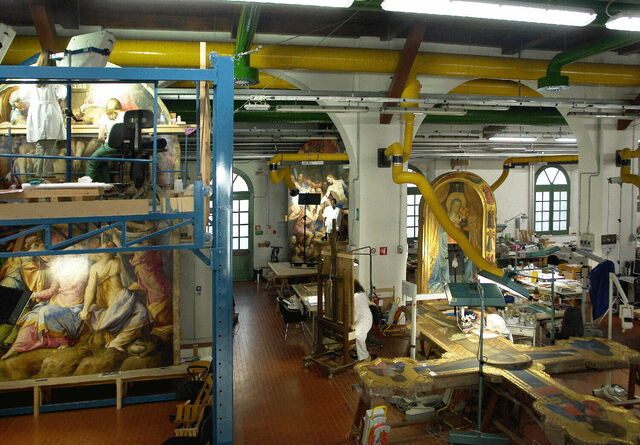
The Opificio delle Pietre Dure, literally meaning the Workshop of Semi-Precious Stones, is an institution run by the Italian Ministry for Cultural Heritage that is based on Via degli Alfani, not far from the Cathedral or the Galleria dell’Accademia, in the centre of Florence. In addition to the museum that most visitors head to, the building is also home to one of two Italian state-run conservation schools (the other being the Istituto Superiore per la Conservazione ed il Restauro), a specialist library, an archive, and a scientific laboratory in which research into the latest and best preventive and conservation techniques is undertaken. A global leader in the field of restoration, the institution is also home, as one might imagine, to a wonderful collection of well-preserved and incredible objects.
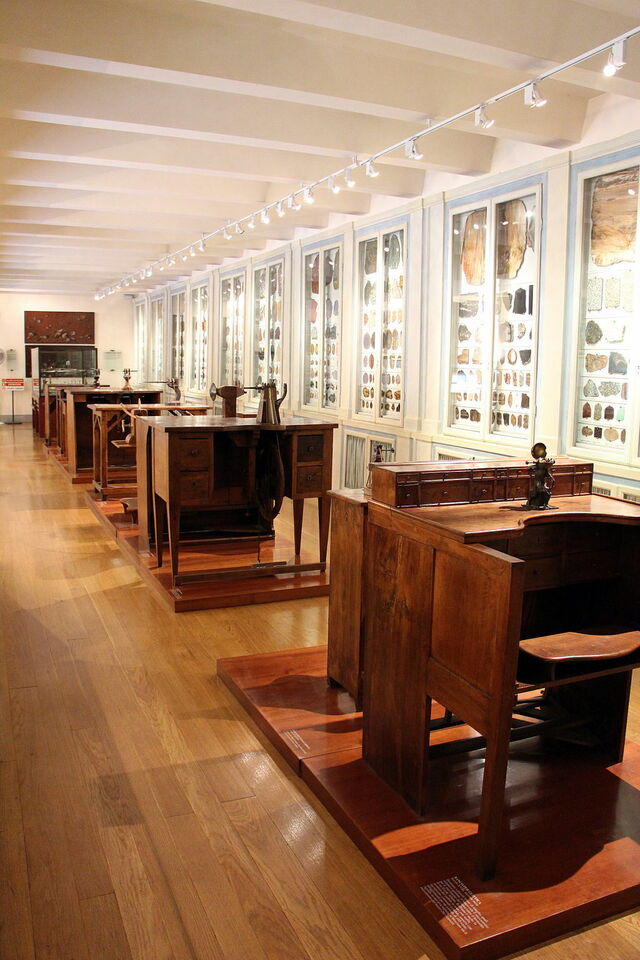
Among the items in the holdings of the museum, there are mosaics, stoneworks, altarpieces, and other such objects, as the name of the institution suggests. However, there is even more to this incredible museum and the collection also boasts wall paintings, drawings and prints, terracotta, pottery, textiles, tapestries, carpets, wooden sculptures, bronzes and weapons from the ancient world, jewellery, and much more besides. As one wanders the hallways and takes in these objects, they observe all sorts of truly remarkable and utterly breathtaking treasures and wonders, making it one of the must-see spots in Tuscany for those who love taking in precious things and beautifully-crafted objects and who have found a vacation rental in Florence.
Tracing its origins back to the Renaissance, the Opificio was established in 1588, at the behest of Ferdinando I de' Medici in order to provide elaborate, inlaid precious and semi-precious stoneworks for various projects and purposes. It became one of the most famous artistic workshops in the period and many incredible creations that decorate the city owe their existence to it. Among them is the overwhelming and marvellous overall decoration of the Cappella dei Principi (the, “Chapel of the Princes,” in which members of the Medici family were interred) in the Basilica di San Lorenzo di Firenze, with its Byzantine-inspired inlay work. Using a technique of layering thin veneers of semi-precious stones, these decorative schemes of inlaid stone were used on large projects and spaces such as the ornamentation of whole rooms like the Medici chapel but, more often, to adorn all sorts of furnishings and artworks on a much smaller scale. Originally located in the Casino Mediceo, the workshop was moved first to the Uffizi and then, finally, to its present location on Via Alfani in 1796. From the end of the 19th century onwards, there was a change in the purpose of the institution, too, with the focus moving from the creation of works of art to its restoration instead. Though there has, indeed, been a change in the direction and activities of the Opificio, it has remained an important art institution in the city since its creation over three centuries ago and is still an incredible and world-leading nexus of knowledge and skill.
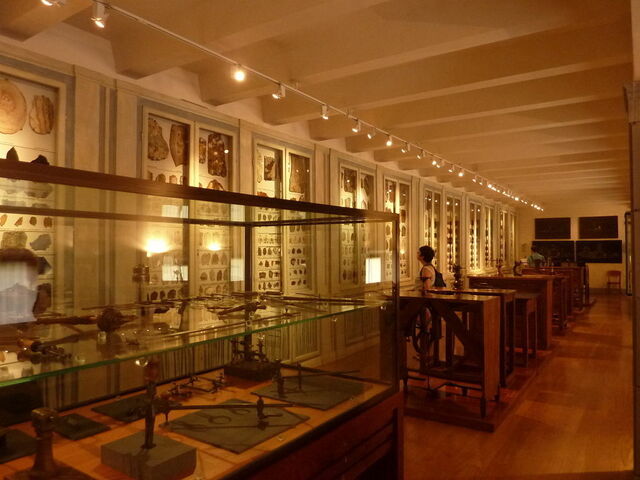
Most visitors will have little to do with the goings-on of the school and research elements of the Opificio unless they are on a specialised private tour that visits the workshops but anyone can come to enjoy the remarkable collection on display in the museum. Although not especially large, the museum is filled with fascinating and lovely things and is actually one of the more pleasantly digestible and doable museums to visit in Florence. The scale and sheer number of objects on display in many of the other key galleries and museums throughout the city can be rather overwhelming but the Opificio can be seen in around an hour and is still a real feast for the eyes. On display, you will find items made in the workshops up until the end of the 1800s, when their purpose changed, tools and explanations of techniques that were once used to make these objects on the Mezzanine floor, ancient marbles, unbelievably vibrant floral designs on black backdrops, designs in gold, a display of labelled stones and gems used in the various objects throughout the museum, Art Nouveau vases, and much more besides. Glimpses through the wrought iron gate overlooking the courtyard may also allow you to spy some pieces awaiting their turn and some of the restoration work that goes on in the workshops today but that is all one can hope for unless on one of the privately arranged tours of these spaces. Even without this addition, however, you’ll still have plenty of magical things to take in in the museum itself.
So, if you love beautiful things, sparkly things, and astounding things made by human hands and you have been browsing our villas with pools in Florence, then be sure to set aside some time to visit the Opificio when you book a trip to this true jewellery box of a city in Tuscany...
Picture 1: Cecilia Frosinini / CC BY 2.5;
Picture 2: Sailko / CC BY-SA 3.0;
Picture 3: Eutrope / CC BY-SA 3.0