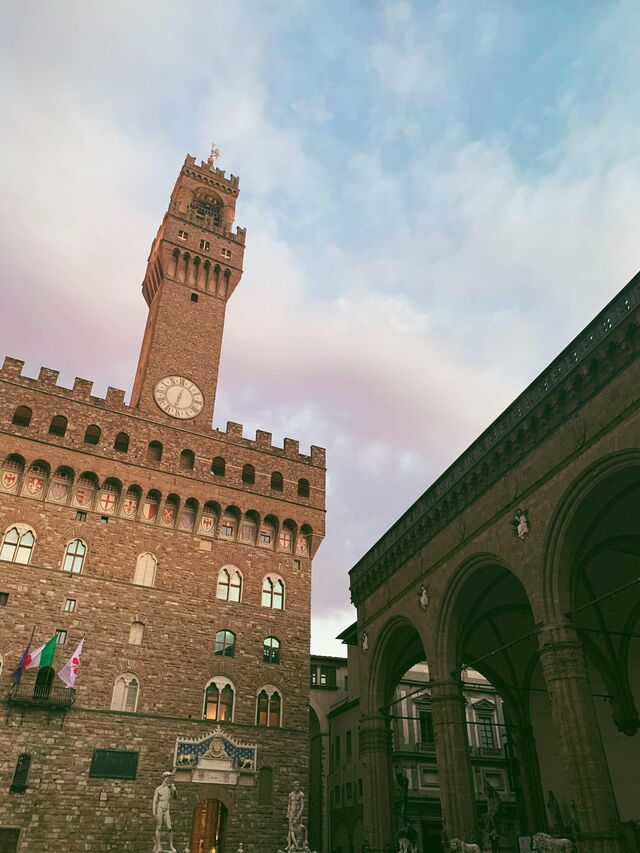
While anyone who is browsing our Tuscany Villas and decides to book a holiday rental in Florence will likely have a list of attractions, landmarks, architectural wonders, and museums that they want to visit devised shortly upon beginning planning their itinerary, we also want to highlight the importance of merely wandering around the city. The birthplace of the Renaissance, Florence is not only home to some extraordinary institutions that house works of art but it is also basically one giant open-air museum as well. So, instead of darting from one attraction to the next, really taking your time as you explore will be incredibly rewarding and is an experience and activity in its own right.
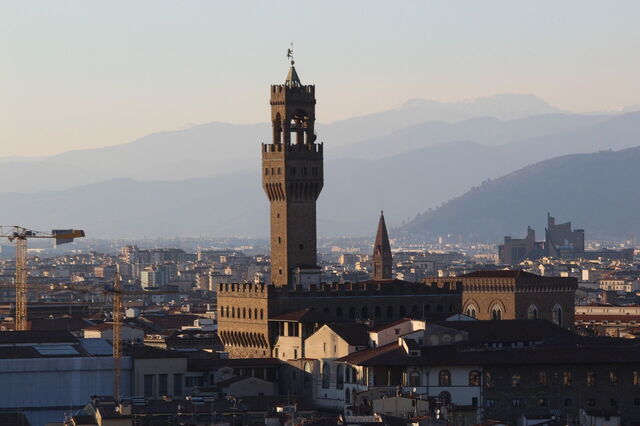
In particular, one should pay close attention when they find themselves in the Piazza della Signoria – and you will almost definitely end up in this square. Located in front of the old town hall, the Palazzo Vecchio (which was originally called the Palazzo della Signoria and is now a museum of the city’s history), the Piazza della Signoria was at the core of civic life for much of the history of Florence and remains a key focal point to this day. Many will choose to visit the Palazzo Vecchio and nearby museums like the world-famous Uffizi gallery to see the extraordinary collection of artworks by artists such as Botticelli, Giotto, Rogier Van der Weyden, Michelangelo, Da Vinci, Raphael, Titian, Caravaggio, Rembrandt, and more. However, if you find a villa with pool in Florence and then just come hang out in the piazza for a little bit, you’ll able to admire some impossibly striking and incredible works of art whenever you want and for free!
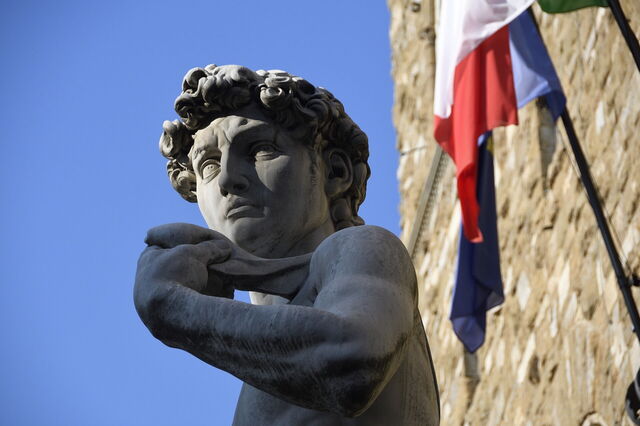
In front of the intimidating and fortified Palazzao Vecchio, designed and built in the 14th century according to plans by architect Arnolfo di Cambio, one finds a replica of Michelangelo's incredibly famous, David. This is actually where the original sculpture was first placed but it was ultimately moved to the Galleria dell'Accademia (about a ten to fifteen minute walk away) for its protection from damage and the elements and for security reasons. While it may not be the original work, however, it is interesting to see it in situ and where it was actually designed to be displayed. One could, also readily pop along to see the real deal in the Accademia afterwards to fully round out the experience while enjoying a vacation in Florence!
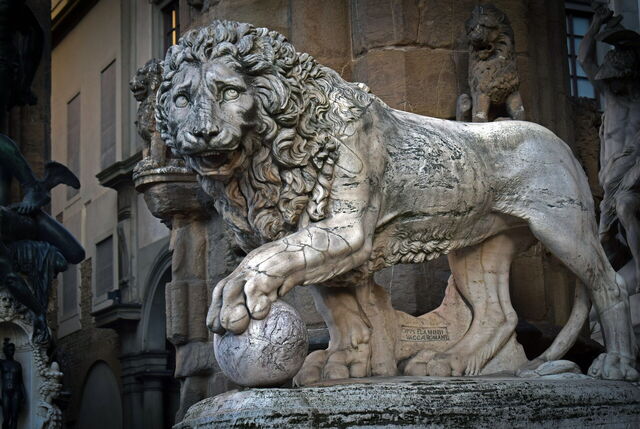
Dotted throughout the piazza, there are other famous works by known names. On a plinth, there is a charming copy of Donatello’s sculpture of the Marzocco, the heraldic lion that is a symbol of the city, along with a copy of the Florentine Lily. Another pair of lions, known at the Medici lions, were once at home in the Medici villa in Rome but have been housed in the piazza since the 18th century. One is an ancient Roman example dating to the 2nd century AD and the other a 16th-century pendant made by Flaminio Vacca.
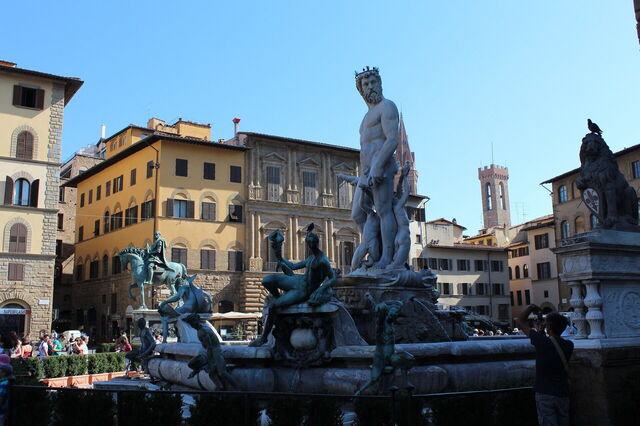
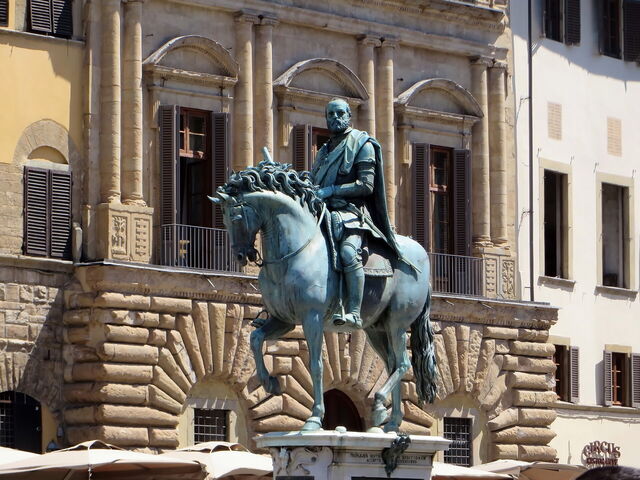
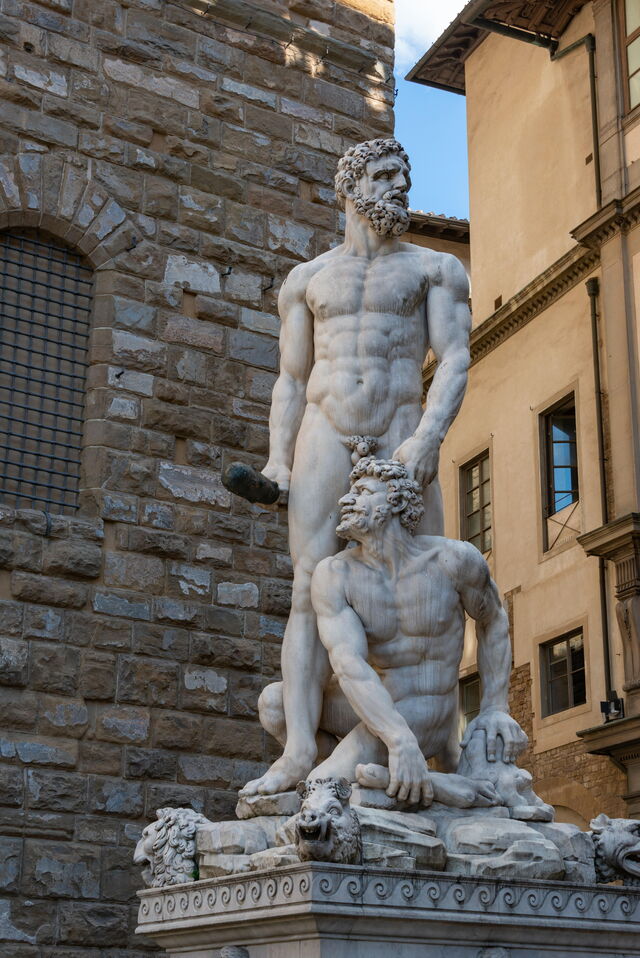
The mark of the Medici family is very visible all throughout the piazza, with another sizeable sculpture, the Equestrian Monument of Cosimo I by Giambologna, taking price of place right in the centre and the impressive Fountain of Neptune by Baccio Bandinelli (created by Bartolomeo Ammannati) abounds with Medici imagery and was commissioned to celebrate the marriage of Francesco de' Medici I to the Grand Duchess Joanna of Austria as well as Cosimo’s power. Bandinelli also created the Hercules and Cacus that is also by the entrance to the Palazzo Vecchio and which was commissioned as a pendant to Michelangelo’s David.
In addition to this wealth of extraordinary works that you can admire if you have found a luxury villa in Florence, there is also an open building holding many examples of sculptures by other famous artists from various periods throughout history. Called the Loggia dei Lanzi, this building is open on two sides with large arches revealing what is essentially a little art gallery. Built by Benci di Cione and Simone di Francesco Talenti, likely according to a design by Jacopo di Sione, the loggia itself is also a delightful creation and wonderful collaboration between several artists and artisans: with lovely allegorical figures of the four cardinal virtues (Fortitude, Temperance, Justice and Prudence) by Agnolo Gaddi in the trefoils below the parapet set against blue enamelled background by a monk named Leonardo and golden stars Lorenzo de' Bicci. The vault that is made up of semicircles, meanwhile, was done by Antonio de' Pucci.
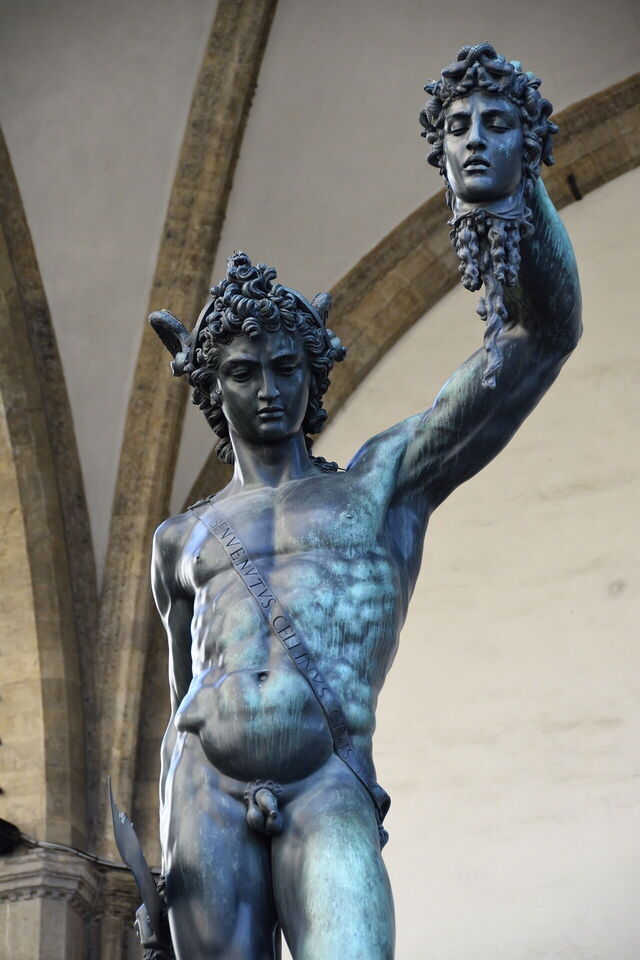
One of the most famous pieces housed inside this incredible structure in the Piazza della Signoria is Cellini's marble statue of Perseus, the Greek hero, who is shown as an idealised male nude with Medusa’s head held aloft triumphantly in one hand and a sword in the other.
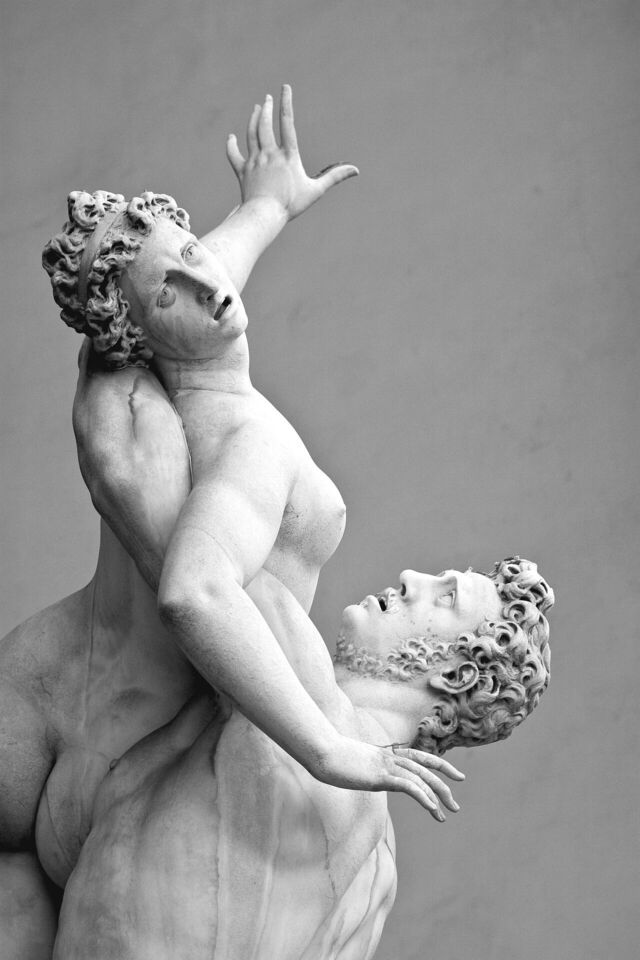
Giambologna's, Rape of the Sabine Women, (Note: The word, "rape," is used in the context of such works about ancient stories as the literary English translation of, "raptio," meaning the large-scale abduction of women) is another famous and beloved highlight. Moved to the loggia in 1583, it is made of one large and imperfect block of marble, the largest that had ever entered Florence up until that point. Conceived without a dominant viewpoint, the piece can therefore be admired from all angles and walking all around it to take in the entirety of the drama of the scene is well worth your while. Another of Giambologna’s works, a less well-known scene of Hercules fighting the centaur Nessus, is also in the loggia, though it was not housed there until 1841.
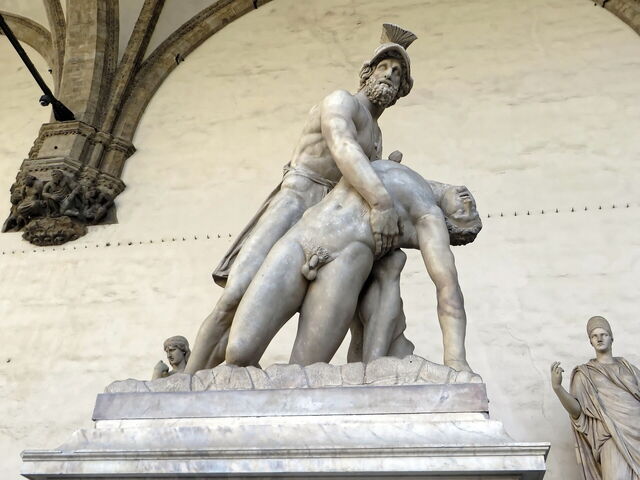
To the rear of the loggia, there are five far more ancient works, a series of marble female figures that were discovered in Rome in the 16th century and kept in the Medici villa there until they were brought to Florence and the loggia in 1789 by order of Leopold II the Holy Roman Emperor, King of Hungary and Bohemia, Archduke of Austri, and Grand Duke of Tuscany. All of these works have had significant modern restorations in the intervening centuries and include the figures of Matidia, Marciana, and Agrippina Minor, and a statue of a barbarian prisoner Thusnelda. The most modern piece that can be found in the loggia is an 1865 sculpture of The Rape of Polyxena, that was created by Pio Fedi.
A truly extraordinary space, right at the core of the city, the Piazza della Signoria has unbelievable artistic offerings that could compete with many of the best museums around the world but they are always on display and free to visit whenever you want – without even having to queue to enter a building (though you may have to compete with other tourists to get the angles and views you want if it is a busy time in the piazza)! Florence really is an utterly magical place to visit for art-lovers but the astounding grandeur and cultural wealth of the city, the fact that beautiful things are everywhere you turn, can be enjoyed by everyone and anyone, no matter your interests or budget or plans, is mind-blowing. So, find a villa in Florence and then simply come and soak it all up because, as we have seen in the discussion of just this one very special piazza in the city (of many), there is art and beauty absolutely everywhere you turn throughout the birthplace of the Renaissance!