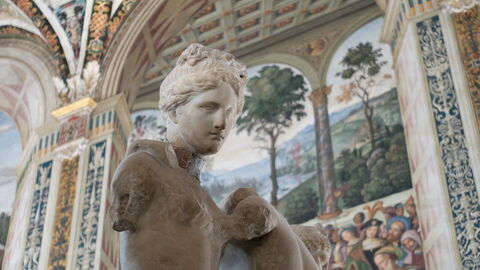
Biblioteca Piccolomini, interior
Posted in: Architectural Gems Churches & Religious Buildings History Important People Localities Museums & Galleries Siena Tourist Attractions
For those visiting the stunning cathedral of Siena, there is another stop on the premises that you won't want to miss: the Piccolomini Library. Another artistic and architectural gem in this great Tuscan Renaissance city, it can be reached when you turn left about halfway along the length of the cathedral's aisle. The Piccolomini name holds a lot of weight and history in Siena. Enea Silvio Piccolomini was a 15th century noble who served as mediator in trying to reconcile Emperor Frederick III with the papal state, arranging the emperor's marriage to Eleonora of Aragon and organising his coronation in Rome and was rewarded by being made the Bishop of Trieste in 1447 and the Bishop of Siena in 1450.

He went on to become a cardinal in 1456 and was elected as Pope Pius II min 1458. A very powerful figure of the time, the library was named after him by the subsequent Pope Pius III, another Piccolomini, his nephew.
The View from Villa dei Mulini
Posted in: History Important People Islands Localities Museums & Galleries Tourist Attractions
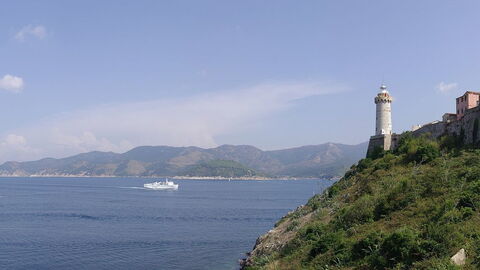
Napoleon was very famously temporarily exiled, after his forced abdication in 1814, to the island of Elba, the idyllic Tuscan island that is the third largest in Italy – hardly what most would call a “punishment”! In fact, he lived very well on the island and even had two different dwellings for the 300 days that he spent there. Villa dei Mulini was one and the other was Villa San Martin. Villa dei Mulini, also known as Palazzina dei Mulini (Palace of the Mills), is located in Portoferraio and was chosen by Napoleon as his state residence.
Michelangelo
Posted in: History Important People Museums & Galleries Renaissance Tourist Attractions
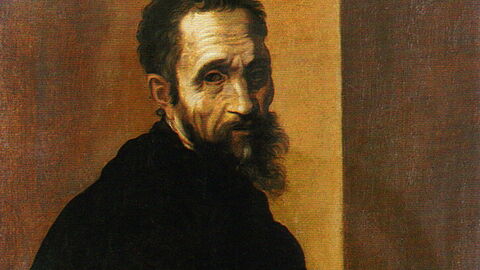
Caprese Michelangelo is a town located 50km away from Arezzo in Tuscany and owes its name to Michelangelo Buonarroti who was born there in 1475 when his father Ludovico was the town’s authoritative figure. It is situated on the Apennine ridge, in the greenest area of the Tuscan Val Tiberina and the surrounding landscape of this part of Tuscany is particularly beautiful, with numerous rivers and watercourses punctuating the fields of vegetables, fruit and flowers on which Caprese Michelangelo's economy is based.

As the birthplace of that great Renaissance Master, it is obviously a site of pilgrimage for the art-lovers of the world but its great beauty means that anyone in your party will enjoying visiting this charming town. Just find a holiday rental in Caprese Michelangelo and discover this little gem for yourself.
David, Donatello
Posted in: Florence History Important People Localities Must See Attractions Renaissance
Donatello's name is one of the most enduringly famous of all Italian Renaissance artists but most are more likely to be familiar with the work of the Ninja Turtle than the sculptor. In fact, unlike with Da Vinci or Michelangelo, most would be hard pressed to even name a single one of his works which is rather a crying shame. Why not find a luxury villa in Florence and plan a trip to rectify this? Explore the city, see the sights and take note of the following works which are must-sees and a good introduction to the artist and his oeuvre.

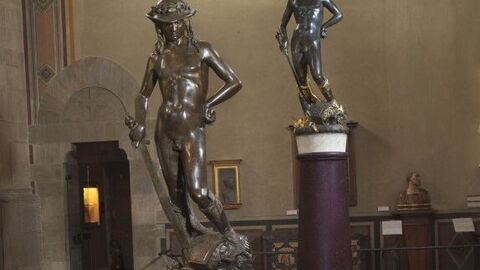
An obvious choice is his “David”. Less well-known than Michelangelo's, it was divisive at the time.
Basilica of San Domenico, Siena
Posted in: Churches & Religious Buildings History Important People Localities Siena Tourist Attractions
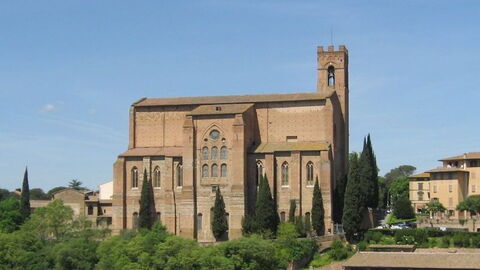
Catherine of Siena was a Dominican tertiary, philosopher and theologian. Born in the 14th century, she began having visions of Christ at the age of five or six. At seven, she had decided to devote her life to God. She resisted marriage as a young woman until she was eventually allowed to join the Dominican Order. She was known for helping the sick and poor and launching reform campaigns among the faithful. Catherine even went so far as to become involved in political matters like swaying the loyalties of cities back towards the papal armies. Her writings spread her word further and gained more followers but she also became known for extreme devotion, eventually dying due to her refusal to eat.