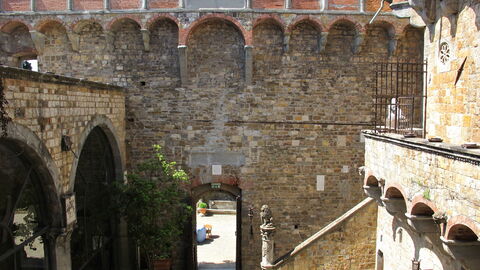
Palazzo Casali
Posted in: Architectural Gems Cortona Localities Museums & Galleries Pretty Views Tourist Attractions
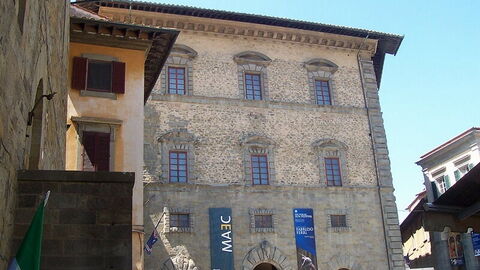
Palazzo Casali is a palace located in the Tuscan town of Cortona that was built by the Casali family, who ruled over the town in the 13th century. It was only a family residence until 1409 and, thereafter, became the Palazzo Pretorio, which was occupied by the city’s Florentine captains. Today, it houses the City Museum and, on the first and top floors, the library and museum of the Accademia Etrusca. A beautiful building and an excellent and historic museum, it is a worthwhile little visit to pop into your itinerary if you are a culture vulture that has found a vacation rental in Cortona.

The façade that is visible today can probably be attributed to Filippo Berettini and was executed at the beginning of the 17th century and the rear façade, looking onto Via delle Carceri, is particularly lovely. From the main Palazzo Casali entrance, you pass through a 17th century carved doorway, into a large atrium that is decorated with coats of arms and opens into a courtyard. Particular architectural elements to take note of are the two staircases and the 16th century sandstone fountain commissioned by Bettino Ricasoli.
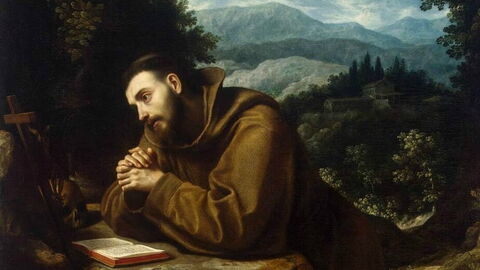
St Francis by Cigoli
Posted in: Churches & Religious Buildings Cortona History Important People Localities Tourist Attractions
Saint Francis of Assisi is one of the most famous and well-known Italian saints. His story is perfectly formed to capture hearts and imaginations: the son of a rich mercantile family, he lived the life of a playboy and was a soldier but, after a being held in captivity as a prisoner of war for a year, he had a big change of heart and renounced his way of life entirely. He dedicated himself to a life of piety and charity and founded the Franciscan order, which is based on poverty and alms.
Courtyard, Vincigliata Castle
Posted in: Architectural Gems Castles & Palaces Cortona History Localities Tourist Attractions
Inspired by the great beauty, the variety, the historic and cultural value, the facilities, and the juicy legends and myths of the castles of Tuscany, we endeavored to put together a list of some of the most interesting examples that the region has to offer. In our final installment in this series, we have two more wonderful castles that we would like to share with you: Girifalco Fortress in Cortona and Vincigliata Castle in Fiesole.

Girifalco Fortress was built by Gabrio Serbelloni, nephew of Pope Pie IV and Francesco Laparelli. The original foundations of the fort were from an Etruscan construction which was later used by the Goths, Lombards, Romans and then re-purposed in the Middle Ages until it was sacked in 1258. It then underwent numerous campaigns of alterations beginning in 1266 and continuing into the 16th century. The current fortress dates back to the second half of the 16th century and was part of a plan for strengthening the defences of the State ordered by Cosimo I de' Medici.
Santa Maria Nuova, Cortona
Posted in: Churches & Religious Buildings Cortona Localities Tourist Attractions
Cortona is a charming medieval hilltown in Tuscany which is an important artistic and cultural centre. Within the walls of the town, it can sometimes seem as though time has stopped long ago and everywhere you turn, you will see historic architectural gems. However, some of the real highlights of the town and its surrounding area are its churches. The Church of Santa Maria Nuova, in particular, as a centralised square-plan Renaissance church, is a prime example of an important principle of Renaissance construction. Santa Maria Nuova was built by Giorgio Vasari in 1554 and is an example of one of that great architect’s later works. If you’re an architecture lover and have found a luxury villa in Cortona, be sure to stop by and check it out.
Girifalco Fortress
Posted in: Castles & Palaces Cortona Localities Tourist Attractions
Girifalco Fortress in Cortona was built by Gabrio Serbelloni, nephew of Pope IV and Francesco Laparelli. Cortona was an important military town from the establishment of the government of Cosimo I Medici until the subjection of Siena in 1555 and the fort was built in the 16th century to bolster the military strength of the city though the site has much older origins as a defensive structure. However, though the building is fascinating historically and as an example of military architecture, its greatest selling point is probably the view that it offers over Cortona and the entire Valdichiana area from the top of the tower. If you're visiting Cortona, this is the best way to introduce yourself to the town.