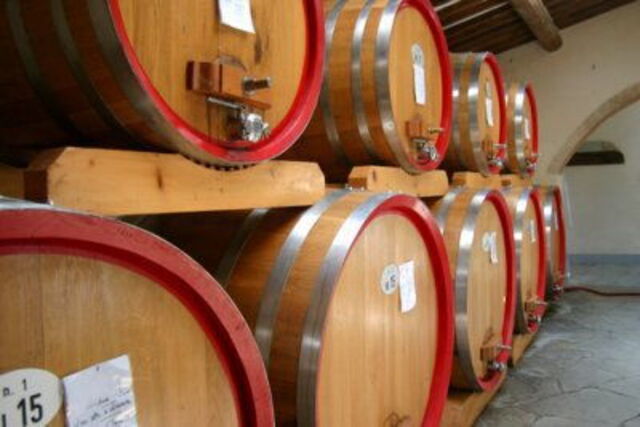
Wine has been a part of life on the Italian peninsula for millennia, even before the Greeks brought the techniques for cultivation, the Etruscans made their wine from wild grapes that grew throughout the hills and mountains. The Greeks brought the knowledge of how to raise the grapes and also refine both the grapes and the wine itself. Carthage, in Northern Africa, was well known for its wine-making skills and after Rome sacked and destroyed the city, the Italian wine-makers began to excel in the trade. There was even a point during the Roman Empire that making wine outside Italy was illegal.
Though hundreds and thousands of years have passed,the traditions remain in tact, and today Italy is both one of the oldest wine producing countries in the world as well as creating one fifth of the world’s wine according to 2005 statistics.
Regulations were enacted in 1963 to ensure that wines that came out of Italy were of a certain quality and followed specific rules during their making. The regulations that govern wine production in Italy can be strict, sometimes limiting the percentages of grapes, what types of grapes are allowed into a certain type of wine, or simply a geographic area. A wine that would be a Chianti that was grown in an area outside the Chianti region could not legally be labeled Chianti. There are four classifications for Italian wine currently:
Armed with this knowledge, the amateur sommelier will find it much easier to distinguish exactly what they are buying for that next dinner party.
Regulations were enacted in 1963 to ensure that wines that came out of Italy were of a certain quality and followed specific rules during their making. The regulations that govern wine production in Italy can be strict, sometimes limiting the percentages of grapes, what types of grapes are allowed into a certain type of wine, or simply a geographic area. A wine that would be a Chianti that was grown in an area outside the Chianti region could not legally be labeled Chianti. There are four classifications for Italian wine currently:
- Vino da Tavola is simply "table wine". Though some quality wines do carry this label, it’s not often. Wines that do not follow regulations enough to fit into the other categories are labeled as Vino da Tavola. Some of the so-called “Super Tuscans” that began to pop-up in recent history were first labeled as Vino da Tavola: though they were superior wines, they did not follow the regulations.
- Indicazione Geografica Tipica (IGT) is the classification that was created for the “Super Tuscans”. These are wines that buck the traditional rules of Italian wine making, but are of a high quality. Some of these use a percentage of cabernet sauvignon grapes instead of the native Italian grapes.
- Denominazione di Origine Controllata (DOC) is a term that is actually used for more than wine, but wine does indeed fall under the regulations. It was created to ensure that all wine labeled a certain type would come from the same area of Italy, as well as use the same percentages of grapes so that a standard could be well defined. When you see this on a bottle of wine, you can be assured that you are indeed drinking a Chianti rather than watered-down red grape juice.
- Denominazione di Origine Controllata e Garantita (DOCG) was created to be a more stringent form of regulation, and the wine is actually government inspected before bottling. The bottles are sealed and marked with a government number to ensure later tampering. The DOCG wines are even more restrictive of what the wineries can do or change when creating their wines. The DOCG are actually sub-regions of the already divided DOC regions.
Armed with this knowledge, the amateur sommelier will find it much easier to distinguish exactly what they are buying for that next dinner party.